7 Best Roll Up Garage Doors for Commercial Use?

Choosing among the 7 Best Roll Up Garage Doors for Commercial Use requires more than comparing prices. Commercial buildings face different pressures every day. A busy warehouse may need rapid cycles and reinforced guides. A restaurant may prioritize cleanliness, quiet operation, and compact storage. A parking facility may need wind resistance, visibility, and reliable access control.

As commercial door specialist Jim Giller explains, “The right door starts with the application, not the price.” That principle matters when evaluating roll up garage doors. Buyers should examine opening dimensions, cycle frequency, insulation needs, security demands, and available headroom. A cold-storage facility needs different performance than a small repair shop. One door cannot solve every problem.

Look closely at the curtain material. Steel supports demanding environments, while aluminum can reduce weight and resist corrosion. Check the operator, emergency release, safety sensors, and service access. These details often decide whether a door performs smoothly at 6 a.m. or stops during a loading rush.

Maintenance matters, too. Dust gathers around guides. Trucks can strike lower sections. Springs and motors eventually need attention. No shortlist is flawless. That deserves honest consideration. Some premium doors cost more initially but may reduce downtime. Others look attractive on paper yet suit lighter use better.

This guide compares seven commercial options through practical experience, manufacturer specifications, safety features, durability, and long-term value. The best choice is not always the strongest door. It is the door that matches the building’s real workload.
7 Best Roll Up Garage Doors for Commercial Use?

Commercial Roll-Up Door Types: Compare 7 Designs by Use, Speed, and Security

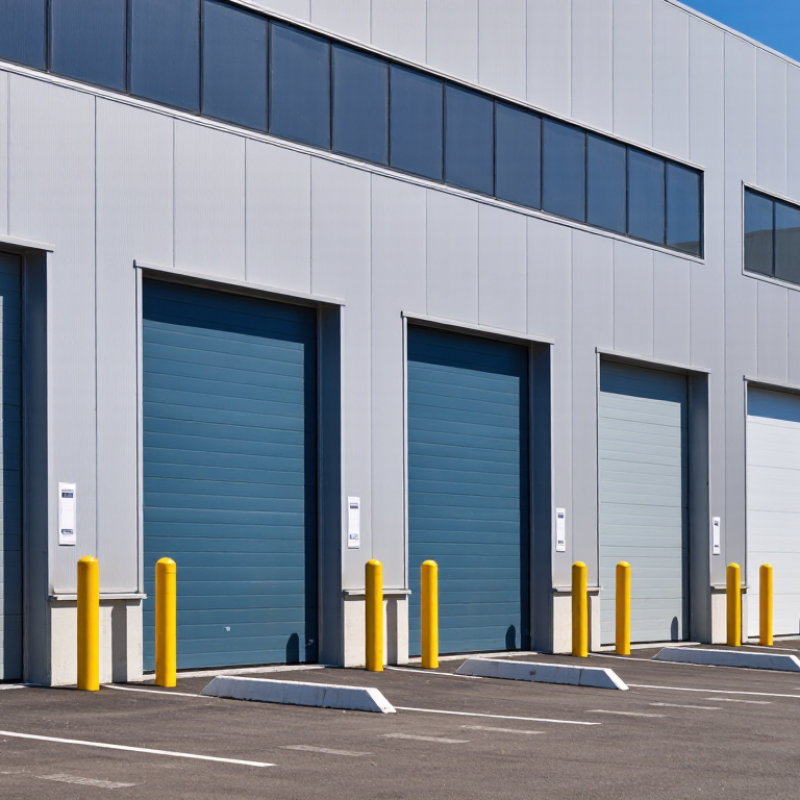
Commercial facilities rarely need one roll-up door design everywhere. Each opening has a different job, traffic pattern, and security risk. A standard service door suits loading bays and workshops. It offers balanced durability and moderate operating speed.

An insulated roll-up door better protects temperature-controlled rooms. Its heavier curtain usually moves more slowly. A fire-rated door supports compartment protection where approved testing and installation requirements apply. It is not a substitute for a complete fire plan.

A high-speed fabric door fits busy warehouses, especially between production zones. It reduces air exchange and waiting time, but needs careful alignment.

A security grille works well for storefronts and indoor retail openings. It provides visibility after closing, though it offers less weather control. A perforated roll-up grille adds airflow and visual screening. It suits parking areas and service counters. A counter shutter covers smaller transaction windows. It saves space and limits access, but it cannot replace a full-sized security door.

Speed matters. So does stopping distance. In daily use, sensors, manual release systems, guides, and bottom seals deserve equal attention. I have seen fast doors underperform because staff ignored cleaning and track inspections. That lesson is easy to overlook. Compare cycle frequency, wind exposure, noise, insulation, and forced-entry resistance before choosing. Verify ratings, emergency operation, and installation quality with a qualified commercial door professional. The best design matches the opening, not the highest advertised speed.

Key Specifications: Cycle Ratings, Wind Loads, Insulation, and U-Factors

7 Best Roll Up Garage Doors for Commercial Use?

A commercial roll up door should match the building’s traffic, climate, and exposure. Cycle ratings show expected operating life. A 10,000-cycle door may suit a small warehouse, while busy loading areas often need 25,000 or 50,000 cycles. Count daily openings carefully. Ten openings each day can exceed 18,000 cycles in five years.

Wind loads need more than a speed label. Ask for tested design pressure and positive or negative pressure values. The wall structure, guides, curtain, and anchors must work together. A door rated for strong wind can still fail if installation is weak. Local building requirements should be checked by a qualified professional. This detail is often ignored.

Insulation matters when the garage is heated or cooled. Look for insulated slats, continuous side seals, and a properly fitted bottom bar. R-value indicates resistance to heat flow, while U-factor measures heat transfer. Lower U-factors generally mean better thermal performance. Compare both values, not just insulation thickness. Metal joints can create thermal bridges. They reduce real-world efficiency. I would also inspect the door after several weeks of use, because a specification sheet cannot show every rattling seal or stiff guide. The perfect rating is rarely perfect in practice.

7 Best Roll Up Garage Doors for Commercial Use: Key Specifications

This chart compares representative commercial roll-up door specification tiers. Cycle ratings indicate expected open-and-close operations, wind loads are shown as design pressure in pounds per square foot, R-value measures insulation resistance, and U-factor measures heat transfer. Higher cycle ratings, wind-load values, and R-values generally indicate greater performance, while a lower U-factor indicates better thermal efficiency. Actual requirements depend on building code, opening size, climate, and project conditions.

Safety and Compliance: Apply UL 325, ANSI/DASMA 102, and OSHA Guidance

When comparing the seven best roll-up garage doors for commercial use, safety must outweigh appearance and price. UL 325 requires monitored entrapment protection for powered door operators. Test the photo eyes with a cardboard box, not just the wall button. The door should stop and reverse promptly.

ANSI/DASMA 102 provides practical criteria for rolling-door construction, installation, and performance. Verify curtain alignment, guides, bottom-bar protection, and emergency release access. OSHA guidance also requires hazard assessment, guarding, and documented employee training. Its 2023 Census of Fatal Occupational Injuries recorded 5,283 workplace deaths in the United States, with transportation and material-moving hazards remaining significant contributors. A loading bay deserves the same attention as a production line. Lockout/tagout procedures should isolate electrical and stored mechanical energy before repairs, as OSHA 29 CFR 1910.147 requires.

Inspect monthly, and record every test. Check frayed cables, bent guides, loose fasteners, and unusual motor noise. A door that closes slowly can still create a crushing point. This is where many evaluations become too optimistic. Compliance labels do not prove correct installation. Qualified technicians should verify force settings, sensor operation, clearances, and manual operation after installation. Keep the inspection log near the control station. Small details matter. (Sources: UL 325; ANSI/DASMA 102; OSHA 29 CFR 1910.147; U.S. Bureau of Labor Statistics, Census of Fatal Occupational Injuries, 2023.)

Seven Best Options: Evaluate Steel, Aluminum, Fire-Rated, and High-Speed Models

7 Best Roll Up Garage Doors for Commercial Use?

Seven Best Options: Evaluate Steel, Aluminum, Fire-Rated, and High-Speed Models

Commercial facilities need doors matched to traffic, impact, weather, and safety demands. Heavy-duty galvanized steel doors suit loading bays with forklifts and frequent contact. Insulated steel models add thermal control for warehouses, workshops, and refrigerated areas. Stainless steel works well in damp or washdown environments, though it can increase project costs. Perforated steel offers airflow and visibility while maintaining a stronger security barrier. The right gauge matters. Thin material may reduce the initial price, but dents can become an expensive maintenance problem.

Aluminum roll-up doors are lightweight and resist corrosion, making them practical for coastal sites and interior service openings. They may not tolerate repeated heavy impacts as well as steel. Fire-rated steel doors support compartment protection, but their rating must match the wall assembly, opening size, and approved installation method. Always verify testing documents and local requirements with a qualified inspector. High-speed fabric doors reduce air exchange and improve workflow between temperature-controlled zones. High-speed aluminum models provide faster cycles with a more rigid curtain and cleaner appearance.

Consider cycle ratings, motor access, emergency release, wind load, and available service support. Measure the opening carefully. Small errors matter. A common mistake is selecting a door by purchase price alone. Energy loss, damaged slats, noisy operation, and delayed repairs can quickly change the total cost. I would also question whether maximum speed is truly necessary; a simpler steel door may perform better when traffic is moderate and impacts are likely.

Selection Framework: Match Door Size, Traffic Volume, Climate, and Budget

Choosing among the seven best roll-up garage doors starts with the opening, not the catalog. Measure width, height, headroom, and side clearance. A door that fits poorly can waste valuable loading time. For large warehouses, heavy-duty steel curtains offer strength and dependable daily service. Insulated steel doors help stabilize temperatures in heated or cooled spaces. High-cycle doors suit busy loading bays with constant vehicle movement.

Traffic volume changes the decision.
A basic service door may handle a small workshop with limited openings. A high-speed roll-up door better supports distribution areas with hundreds of cycles each day. Security grilles work well for covered parking, retail storage, and visibility-sensitive spaces. Fire-rated doors may protect selected openings, but they require verified ratings, correct installation, and regular inspection. Requirements vary by building code.

Climate deserves equal attention.
Corrosion-resistant aluminum can perform better near salt air or frequent washing. In cold regions, insulated panels and reliable bottom seals reduce drafts and heat loss. Wet floors can expose weak hardware quickly. Budget planning should include motors, controls, repairs, energy use, and installation labor. I have seen buyers choose the cheapest curtain, then replace worn parts within a year. That mistake is easy to repeat. No door is perfect. A quieter, stronger model may cost more upfront but reduce disruption later. Ask installers for cycle ratings, maintenance intervals, wind resistance, and documented service records before approving the purchase.