
What Is a Roll Up Door and How Does It Work?
A roll up door is a practical entrance built for spaces where swing doors waste valuable room. Its curtain rises vertically and coils around a barrel above the opening. This simple motion supports warehouses, garages, loading bays, retail units, and service areas.
“An effective roll up door must balance movement, security, and daily durability,” says Jim Gies, a commercial door industry specialist. That balance is easy to overlook. The door is not merely a sheet of metal. It includes slats or panels, guides, springs, a barrel, bottom bar, and operating system. Together, these parts control how the curtain travels.
The working process is direct. When someone pulls the chain, turns the crank, or activates the motor, the barrel rotates. The curtain moves upward along two side guides. It then wraps into a compact coil above the doorway. Reversing the movement lowers the curtain until the bottom bar meets the floor or threshold.
Small details matter.
A damaged guide can make the door scrape, hesitate, or jam. Poorly balanced springs may increase operating force and shorten component life. Motorized models can add sensors, remote controls, and emergency release systems, but they still need correct installation and inspection. A roll up door also requires suitable sizing, material selection, and wind or impact considerations.
This article explains the main types, components, operating methods, benefits, and maintenance concerns. It also acknowledges an uncomfortable truth: a door that looks simple can hide complex mechanical risks. Understanding its design helps owners ask better questions before choosing, repairing, or replacing one.
What Is a Roll-Up Door?
What Is a Roll-Up Door?
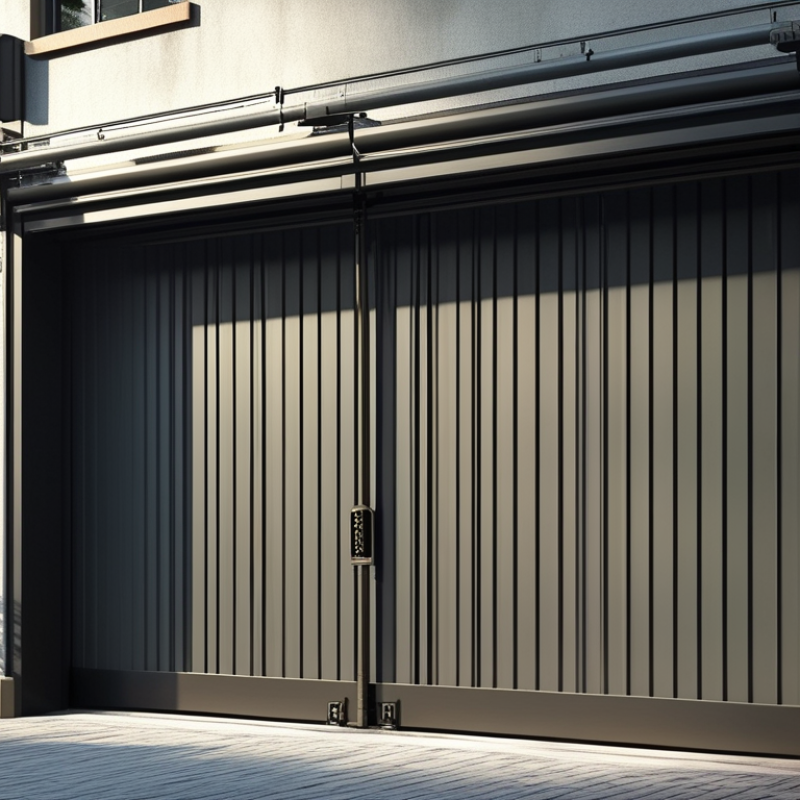
A roll-up door is a flexible or rigid barrier that opens vertically. Its curtain travels upward and stores around a barrel above the opening. Unlike a hinged door, it needs little clearance beside the doorway. This design suits warehouses, workshops, parking areas, and service counters.
The door works through several coordinated parts. Slats or insulated panels form the curtain. Guide rails keep it aligned. A barrel receives the curtain as it rises. Springs, a chain hoist, or an electric motor supplies lifting force. The operator should check balance, guide wear, bottom seals, and emergency release functions. Small faults can create uneven movement. That detail is easy to overlook.
Performance depends on the opening’s use and local conditions. A high-cycle door may require stronger springs and faster controls. An insulated model can reduce heat transfer, but it cannot stop every air leak. The U.S. Department of Energy reports that space heating represents about 32% of energy use in U.S. commercial buildings, based on its Commercial Buildings Energy Consumption Survey. Door selection therefore affects comfort, though it is only one part of building efficiency. A 2023 industry safety report from the Door and Access Systems Manufacturers Association also emphasizes regular inspection and trained servicing for commercial door systems. The practical lesson is simple: measure traffic, wind exposure, clearances, and maintenance access before choosing a model. A perfect door on paper may perform poorly in a busy, dusty opening.
What Is a Roll-Up Door and How Does It Work?
| Dimension | Typical Information | How It Works | Practical Consideration |
|---|---|---|---|
| Definition | A roll-up door is a vertically moving door made from connected slats, panels, or a flexible curtain. | The door travels upward and coils around a barrel or winds into a compact roll above the opening. | It does not swing outward, so it can preserve usable space inside and outside the doorway. |
| Main Components | Curtain or slats, guides, bottom bar, barrel, brackets, hood, springs, and operating mechanism. | Side guides keep the curtain aligned while the barrel supports and stores it in the open position. | Correct alignment and secure mounting are essential for smooth and safe operation. |
| Opening and Closing Motion | The door moves vertically along both sides of the opening. | When opening, the curtain rolls upward; when closing, gravity and controlled tension guide it downward. | The opening should be clear of obstructions throughout the full travel path. |
| Operating Methods | Common methods include manual chain or pull operation, hand pushing, and electric motor operation. | Manual systems use mechanical force, while motorized systems use a gear-driven operator and control switches. | Motorized operation is useful for frequent cycles, larger doors, or locations requiring controlled access. |
| Common Materials | Steel, aluminum, stainless steel, and high-strength flexible fabrics are commonly used. | Material selection determines the door’s resistance to impact, corrosion, weather, and wear. | Corrosion-resistant materials are generally better suited to damp, coastal, or wash-down environments. |
| Insulation | Some roll-up doors use insulated slats or panels; others are designed as non-insulated closures. | Insulated sections add resistance to heat flow and may reduce air movement through the closed door. | Insulation level varies by construction, thickness, seals, and installation quality. |
| Space Requirement | The door requires vertical clearance above the opening for the rolled curtain or coiled barrel. | The stored curtain occupies overhead space rather than a large area in front of the doorway. | Available headroom and side-room dimensions should be checked before installation. |
| Security Function | Solid slats and reinforced curtains can provide a physical barrier against unauthorized entry. | When closed, the curtain sits within side guides and can be secured with locks or an operator brake. | Security performance depends on curtain strength, guide design, locking hardware, and proper installation. |
| Weather Protection | Weather-rated designs may include bottom seals, side seals, hood protection, and wind-resistant guides. | Seals reduce gaps around the perimeter while the curtain blocks rain, wind, dust, and sunlight to varying degrees. | No roll-up door is completely airtight; performance depends on the design and site conditions. |
| Safety Features | Common features include bottom-edge sensing, photoelectric sensors, emergency release, and manual override. | These features can stop, reverse, or allow manual movement when an obstruction or power failure occurs. | Safety equipment should be selected, tested, and maintained according to applicable local requirements. |
| Typical Applications | Used for garages, warehouses, loading areas, workshops, retail openings, service counters, and storage facilities. | The vertical rolling action allows the door to separate spaces without requiring a swing radius. | The correct door type depends on opening size, traffic frequency, security needs, climate, and available clearance. |
| Maintenance Needs | Routine care includes cleaning the curtain, inspecting guides and fasteners, checking seals, and testing safety devices. | Maintenance helps prevent friction, misalignment, corrosion, excessive noise, and unexpected operating problems. | Spring, barrel, and motor work can involve stored energy and should be handled by qualified personnel. |
Note: Dimensions, materials, operating speeds, wind resistance, insulation values, and safety provisions vary by door design and installation conditions.
Related Posts
-

Exploring the Benefits of Shop Roll Up Doors: A Comprehensive Guide for Business Owners
-
How to Choose the Best Shop Roll Up Doors for Your Business Needs?
-
Best Shop Roll Up Doors in China Which One Should You Choose?
-
How to Choose the Best Shop Roll Up Doors for Your Needs?
-
Best Shop Roll Up Doors in China for Global Buyers?
-
Why Roll Up Garage Doors Are the Ultimate Space Saving Solution