What Are China Top Overhead Coiling Door Suppliers?

China’s overhead coiling door industry is gaining attention from warehouses, factories, logistics hubs, and commercial buildings. Market research supports this interest. Grand View Research’s 2024 industrial doors analysis identifies automation, safety, and energy efficiency as major purchasing drivers. Fortune Business Insights also links industrial door demand with expanding warehousing and manufacturing activity.

However, selecting China’s top overhead coiling door suppliers requires more than comparing factory prices. Buyers should examine product certifications, curtain materials, motor performance, wind resistance, thermal insulation, and after-sales support. A dependable supplier should explain testing methods clearly. It should also provide installation drawings, maintenance schedules, spare-part availability, and documented quality controls.

Safety matters most.

Relevant standards include EN 13241 for industrial, commercial, and garage doors, along with applicable ISO quality-management practices. These references do not automatically prove supplier excellence. They offer a useful comparison framework. In real projects, a door may face dust, frequent cycles, humid air, forklift traffic, or strong coastal winds. Small design weaknesses become expensive failures.

This guide evaluates leading Chinese suppliers through practical and verifiable factors. These include manufacturing experience, export records, customization ability, delivery consistency, technical support, and customer feedback. Public company information and industry reports provide useful evidence, but they are not perfect. Supplier rankings can change as factories expand, product lines evolve, and service quality fluctuates. Buyers should request current certificates, test reports, production photographs, and project references before signing contracts. That step may feel slow. It often prevents costly surprises.
What Are China Top Overhead Coiling Door Suppliers?

What Are Overhead Coiling Doors and How Do They Work?

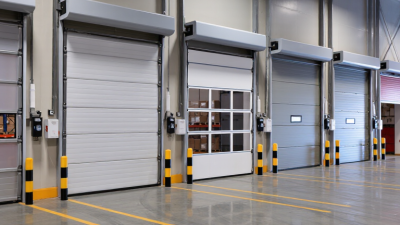
Overhead coiling doors use a curtain of connected steel or aluminum slats. The curtain travels vertically inside side guides. It then wraps around a barrel above the opening. An electric motor, gearbox, or spring counterbalance controls movement. When opened, the door forms a compact roll above vehicles and stored goods.

The system looks simple. It is not always simple. Sensors can stop the curtain when a person, forklift, or package crosses the opening. A bottom safety edge helps reduce impact risks. Sealed guides also limit dust, wind, and light leakage. According to Grand View Research’s 2024 Industrial Doors Market analysis, the global market was valued at roughly USD 2.2 billion in 2023. This reflects growing demand for durable access systems in factories, warehouses, and logistics facilities.

Supplier evaluation should go beyond price. Check wind-load calculations, cycle testing, corrosion protection, emergency release design, and spare-parts support. MarketsandMarkets has identified automation and connected building systems as important trends in industrial door development. That matters for facilities tracking usage and maintenance intervals. Still, sensors need regular testing. A specification can look excellent on paper, yet poor installation may cause uneven rolling, noise, or early wear. Measure the opening carefully. Confirm the operating cycle. Small details matter.

Why Choose Chinese Overhead Coiling Door Suppliers?

Choosing Chinese overhead coiling door suppliers can offer practical advantages for commercial and industrial projects. Many manufacturers operate dedicated production lines for slats, guides, shafts, motors, and control systems. This integrated process can shorten purchasing time and reduce communication gaps. Buyers can also request sizes, colors, insulation levels, wind resistance, and opening speeds for different buildings.

Experience matters more than attractive quotations. A reliable supplier should provide technical drawings, load calculations, material certificates, and clear installation instructions. I recommend checking weld quality, curtain alignment, motor noise, and emergency release functions during sample testing. Factory audits can reveal useful details, such as organized storage, calibration records, and final inspection procedures. These details often predict long-term performance better than website claims.

Cost is another reason to consider Chinese suppliers, but low price alone creates risk. Spare parts availability, packaging strength, response time, and warranty terms deserve careful review. Ask how the supplier handles damaged slats or control faults after delivery. No supplier is perfect. Some technical documents may need clarification. Language and time-zone delays can also slow decisions. A qualified exporter should respond with drawings, photos, test results, and realistic production schedules. That evidence supports a safer choice and helps prevent expensive changes during installation.

Who Are the Top Overhead Coiling Door Suppliers in China?

China’s top overhead coiling door suppliers are usually specialized manufacturers, not general trading companies. The strongest suppliers operate dedicated production lines for steel, aluminum, and insulated rolling doors. They control key stages, including slat forming, curtain assembly, motor installation, and final testing.

Reliable suppliers provide clear technical data before quoting. This should include opening size limits, wind-load ratings, insulation values, cycle-life results, and motor specifications. They should also explain safety features, such as photoelectric sensors, emergency release systems, and obstruction protection. Factory audit reports, material certificates, and installation drawings improve purchasing confidence. These details matter more than attractive catalog photos.

Experienced suppliers can handle custom colors, unusual dimensions, and different control systems. They also keep replacement slats, springs, motors, and control boards available. Response speed is important after delivery. A slow service team can create expensive downtime. Buyers should inspect production samples, review export records, and request references from comparable projects. A low quotation may conceal weaker steel, limited testing, or poor packaging. No supplier is perfect. Even a capable factory may misunderstand site conditions or underestimate installation difficulty. Clear drawings and written responsibilities reduce these risks. The best choice is the supplier that combines verified manufacturing ability, stable quality, practical engineering support, and dependable after-sales communication.

What Are China’s Top Overhead Coiling Door Suppliers?

Suggested evaluation priorities for identifying reliable overhead coiling door suppliers in China

The chart presents a practical buyer-evaluation framework rather than a company ranking. Compliance, customization capability, manufacturing capacity, export experience, after-sales support, and delivery reliability are key dimensions when comparing Chinese overhead coiling door suppliers.

How to Compare Chinese Overhead Coiling Door Manufacturers?

Comparing Chinese overhead coiling door manufacturers requires more than checking price lists. Examine their production experience, technical drawings, and completed project records. A reliable supplier should explain curtain thickness, slat profiles, guide rails, motor capacity, and wind-load performance clearly. Ask for test reports and certificates that match your destination market. Documents should be verifiable. Vague answers deserve caution.

Visit the factory online or in person, if possible. Observe coil-forming equipment, welding areas, powder-coating lines, and final inspection stations. Request a sample door with measured dimensions, opening cycles, surface finish, and noise levels. Check whether the supplier controls key components or only assembles purchased parts. This difference can affect consistency. I have found that small details, such as uneven guides or weak packaging, often create larger installation problems later.

Tips: Compare at least three quotations using the same specifications. Ask for installation drawings, spare-parts lists, warranty terms, and response times. Confirm delivery schedules in writing, including inspection points before shipment. Do not choose the lowest offer automatically. It may exclude motors, safety edges, packing, or technical support. One imperfect area deserves attention: factory photos can look impressive, but they cannot replace production records and independent verification. Look for practical evidence.

How to Select the Right Supplier for Your Project?

Selecting a top overhead coiling door supplier starts with your opening, not a sales ranking. Measure width, height, headroom, side room, and floor conditions on site. Share operating cycles, traffic speed, temperature, wind exposure, and security needs. A supplier that asks precise questions shows practical experience. One that sends a generic price may miss costly details. I have seen small clearance errors delay installation. They looked minor at first.

Review technical evidence before comparing prices. Request drawings, material grades, curtain thickness, guides, spring systems, motor ratings, and control details. Confirm tested performance for wind, fire, insulation, or impact resistance when your project requires it. Ask which standards support each claim. Certificates should match the proposed model, not an older product. Check factory quality records and installation procedures. Independent inspection can add confidence, especially for large openings. Maybe overkill? Sometimes it prevents rework.

Evaluate after-sales support with the same care. Ask for response times, spare-parts availability, maintenance training, and written warranty limits. Contact recent customers with similar building types. Ask whether the supplier solved faults without blaming installation. A clear contract should define delivery, testing, commissioning, and acceptance records. Compare total ownership cost, including energy loss and service visits. The cheapest quote is rarely the safest decision. Still, expensive does not always mean better. Use evidence, not polished promises.

What Are China Top Overhead Coiling Door Suppliers? - How to Select the Right Supplier for Your Project?

Evaluation Dimension Recommended Benchmark for a Qualified Supplier Typical Market Data or Range What the Buyer Should Verify Project Importance
Product Application The supplier offers solutions matched to the operating environment. Industrial, commercial, warehouse, loading-bay, fire-rated, high-speed, and wind-resistant applications are commonly available. Request application references, operating-temperature limits, exposure conditions, and installation recommendations. Very High
Door Size Capability The supplier can manufacture the required width, height, barrel, guides, and bottom-bar configuration. Common industrial overhead coiling doors are often produced for openings approximately 2.5–8 m wide and 2–6 m high; larger sizes require engineering review. Confirm maximum tested dimensions, clear opening requirements, headroom, side room, and structural support loads. Very High
Curtain Material and Thickness Material selection is based on security, corrosion, insulation, and wind-load requirements. Steel curtains commonly use galvanized or coated steel; typical slat thickness is about 0.8–1.5 mm, while aluminum options are generally lighter and more corrosion resistant. Ask for material grade, coating specification, salt-spray or corrosion data, slat profile, and curtain weight per square meter. High
Wind-Load Resistance The selected door has a documented wind-load rating suitable for the building location. Commercial and industrial doors may be engineered for approximately 0.7–2.5 kPa or more, depending on design, size, guides, and local code requirements. Request pressure calculations, test reports, guide design, anchoring details, and the applicable regional standard. Very High
Operating Speed The opening speed supports the required traffic flow without compromising safety. Standard motorized rolling doors commonly operate around 0.1–0.3 m/s; high-speed systems may operate at approximately 0.5–2.0 m/s, depending on design. Verify measured opening and closing speeds, control logic, emergency release, and obstruction detection. Medium to High
Cycle Rating The door is rated for the expected daily operating frequency and maintenance schedule. Basic commercial systems may be rated for approximately 10,000–25,000 cycles, while heavy-duty systems can be rated at 50,000–100,000 cycles or more. Confirm whether the rating applies to the complete door assembly, motor, springs, and control system. Very High
Safety Protection The door includes protection against entrapment, uncontrolled movement, and accidental operation. Common safety provisions include photoelectric sensors, bottom-edge sensing, emergency stop controls, manual release, and automatic braking or limits. Review wiring diagrams, safety-device test procedures, risk assessment, and compliance with the destination market’s machinery and safety rules. Critical
Motor and Power Supply The drive system is compatible with the project’s voltage, frequency, duty cycle, and control requirements. Industrial systems commonly use single-phase or three-phase power, with motor ratings often approximately 0.75–5.5 kW depending on door size and operating frequency. Confirm voltage, frequency, rated torque, protection class, braking method, control-panel components, and local electrical compliance. High
Fire-Rated Performance Fire resistance is supported by certification for the exact door configuration and installation method. Fire-rated rolling doors are commonly specified in ratings such as 60, 90, 120, or 180 minutes, subject to the applicable testing standard. Require a valid test or certification report covering size limits, wall type, mounting details, closing mechanism, and accessories. Critical When Required
Insulation and Energy Efficiency The door’s thermal and air-sealing performance is suitable for temperature-controlled areas. Insulated slats may use polyurethane or similar cores; actual U-value and air leakage depend on slat geometry, seals, guides, and installation quality. Request tested U-value, air-infiltration data, seal details, and performance at the intended temperature difference. Medium to High
Customization Capability The supplier can adapt dimensions, finishes, controls, mounting arrangements, and accessories. Typical options include powder-coated finishes, stainless-steel components, vision panels, remote controls, interlocks, warning lights, and backup operation. Ask for approved drawings, color samples, interface diagrams, accessory compatibility, and engineering-change procedures. High
Quality Management The supplier operates documented production, inspection, and traceability procedures. A quality-management system based on ISO 9001 principles is a useful baseline, but certification alone does not replace product testing. Check certificate validity, factory inspection records, incoming-material controls, final inspection reports, and nonconformance procedures. Very High
Lead Time The supplier provides a realistic production schedule linked to approved drawings and material availability. Standardized orders may require approximately 3–6 weeks for production; customized or certified systems may require 6–12 weeks or longer. Clarify the start point for lead time, approval deadlines, inspection dates, packing time, and shipping schedule. High
Export Packaging and Logistics Components are protected against moisture, impact, deformation, and corrosion during international transport. A complete door package may include curtains, guides, barrel, motor, control panel, hardware, and installation parts shipped in separate protected packages. Verify packing lists, moisture protection, lifting points, container loading plan, spare-parts packaging, and Incoterms. High
Warranty and Spare Parts The supplier provides clear warranty coverage and long-term availability of wear parts. Commercial warranties commonly range from 12–24 months, subject to exclusions, installation conditions, and maintenance requirements. Confirm coverage for the curtain, motor, controls, springs, sensors, labor, replacement parts, and response times. Very High
Technical Support The supplier supports design review, installation, commissioning, troubleshooting, and maintenance. Useful documentation includes installation manuals, wiring diagrams, foundation or fixing details, commissioning checklists, and maintenance schedules. Request sample documents, remote-support arrangements, training options, and escalation contacts. High
Total Cost of Ownership The decision considers purchase price, installation, energy use, maintenance, downtime, and replacement parts. The lowest initial quotation may not provide the lowest lifecycle cost when cycle rating, motor efficiency, spare-parts access, and service response are considered. Compare equivalent specifications, five-year maintenance assumptions, expected downtime, consumables, and site-service costs. Very High
Selection Note: The figures shown are general industry benchmarks rather than guaranteed specifications. Final selection should be based on the project’s opening dimensions, wind conditions, operating frequency, fire requirements, electrical supply, local codes, installation method, and verified technical documentation.