How to Choose a Garage Door Technician in China?
Choosing a garage door technician in China requires more than comparing prices on a service platform. A door may look simple, yet its springs, cables, rollers, sensors, and opener create serious mechanical risks. Grand View Research’s 2024 garage door market analysis links market growth with replacement demand and automated door systems. Mordor Intelligence’s China smart home market report also describes wider adoption of connected home devices. These trends increase convenience, but they also require better installation and troubleshooting skills.
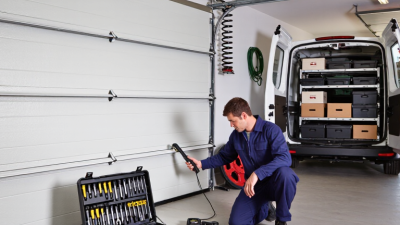
Look for verifiable experience. Ask whether the technician has repaired your door brand and model before. Request a clear diagnosis, written quotation, warranty terms, and an itemized invoice. A reliable professional should inspect the spring tension, track alignment, cable condition, emergency release, and photo-eye sensors. They should explain the fault beside the door, not only send a vague message. Check the company’s business registration and service history through reputable Chinese platforms. Verify that replacement parts match the manufacturer’s specifications and applicable Chinese standards.
A cheap quote can be tempting. It can also conceal unsuitable parts or rushed adjustments. No checklist is perfect. I would still ask for photographs before and after the repair. I would also test the door several times, watching for uneven movement, grinding sounds, or a delayed stop. Industry reports describe a growing and increasingly technical market, but they cannot judge one technician’s honesty. Your final decision should combine documented qualifications, practical experience, transparent communication, and safe working habits. When a technician refuses basic questions, keep looking. Reliability matters more than speed.
Verify Business Registration and EN 12453 Safety-Control Training
How to Choose a Garage Door Technician in China?
Verify the technician’s business registration before discussing repairs. Search the company name or unified social credit code through China’s National Enterprise Credit Information Publicity System. Check its legal status, registered address, business scope, and registration history. The invoice should match the contracting entity. This small detail matters.
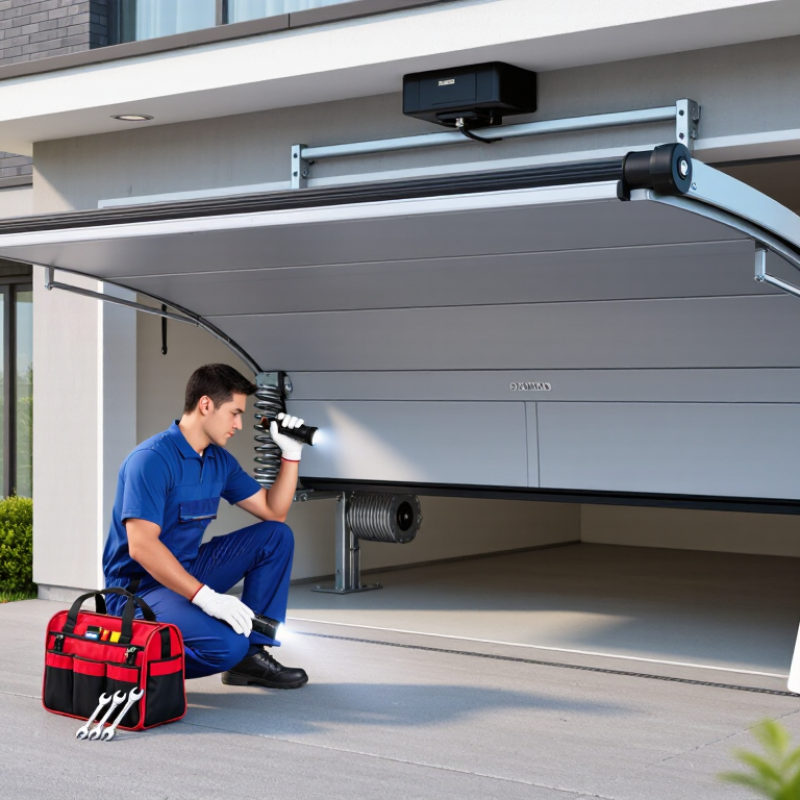
Ask for evidence of EN 12453 safety-control training. EN 12453:2017+A1:2021 addresses safety requirements and test methods for powered doors and gates. Training should cover closing-force measurement, obstacle detection, photoelectric protection, emergency release, and control-system testing. A certificate alone is not proof of competence. Request the course syllabus, assessment method, trainer details, and training date. Practical evidence is stronger.
During a site visit, observe whether the technician tests the door in several positions. They should document measured force, sensor alignment, stopping distance, and reversal performance. Ask for photographs and a written service record. The European Commission’s 2023 Safety Gate report recorded 3,412 product safety alerts, showing why traceable checks matter. Yet standards do not remove every risk. A technician may pass training and still miss a worn cable or unstable bracket. That possibility deserves attention. Choose someone who explains limitations clearly, uses calibrated tools, and accepts a follow-up inspection. Suddenly, trust becomes measurable.
Compare Three Written Quotes Using Labor, Parts, and Travel Cost Data
How to Choose a Garage Door Technician in China?
When choosing a garage door technician in China, request three written quotes. Ask each technician to inspect the door before pricing the repair. Each quote should separate labor, parts, travel, tax, warranty, and payment timing. A low total may hide important exclusions. Ask whether the price includes spring adjustment, cable replacement, safety testing, and disposal. Clear paperwork shows professional habits.
Compare labor as a separate line. In many Chinese cities, technicians charge per visit, hour, or repair task. Travel costs may change with distance, parking, weekend timing, or repeat visits. Check whether the technician serves your district. Request a fixed travel fee in writing. Small details matter. One quote may include diagnosis, while another adds it after arrival. This difference can distort the comparison.
For parts, compare specifications instead of vague descriptions like “standard spring.” Ask about material, dimensions, load rating, and service warranty. Keep photos of the damaged component and the quote. They can help prevent accidental substitutions. I once chose the cheapest quote, but its unclear labor scope caused a second visit. That was my mistake. Verify business registration, technician experience, safety procedures, and a reachable service address. A reliable technician should explain risks without pressuring you into unnecessary work.
How to Choose a Garage Door Technician in China? - Compare Three Written Quotes Using Labor, Parts, and Travel Cost Data
| Comparison Item |
Written Quote A |
Written Quote B |
Written Quote C |
| Project and Service Details |
| Service location |
Urban service area |
Urban service area |
Urban service area |
| Repair scope |
Replace two torsion springs, rollers, and lifting cables; balance and test door |
Replace two torsion springs, rollers, and lifting cables; balance and test door |
Replace two torsion springs, rollers, and lifting cables; balance and test door |
| Estimated completion time |
3.0 hours |
2.5 hours |
3.5 hours |
| Appointment availability |
Within 2 working days |
Within 1 working day |
Within 3 working days |
| Labor Cost Data |
| Quoted labor rate |
¥45/hour |
¥52/hour |
¥40/hour |
| Labor calculation |
3.0 × ¥45 |
2.5 × ¥52 |
3.5 × ¥40 |
| Labor subtotal |
¥135 |
¥130 |
¥140 |
| Parts Cost Data |
| Pair of torsion springs |
¥180 |
¥165 |
¥190 |
| Heavy-duty door rollers |
¥48 |
¥60 |
¥42 |
| Lifting cable set |
¥32 |
¥36 |
¥30 |
| Fasteners and consumables |
¥15 |
¥10 |
¥12 |
| Parts subtotal |
¥275 |
¥271 |
¥274 |
| Travel Cost Data |
| One-way travel distance |
25 km |
18 km |
32 km |
| Travel charge rate |
¥0.80/km |
¥1.00/km |
¥0.75/km |
| Travel calculation |
25 × ¥0.80 |
18 × ¥1.00 |
32 × ¥0.75 |
| Travel subtotal |
¥20 |
¥18 |
¥24 |
| Terms and Final Comparison |
| Written warranty |
90 days on labor; 6 months on parts |
60 days on labor; 3 months on parts |
180 days on labor; 12 months on parts |
| Included testing |
Door balance, manual lift, and three automatic cycles |
Door balance and two automatic cycles |
Door balance, safety reversal, and three automatic cycles |
| Payment terms |
30% booking deposit; balance after testing |
50% booking deposit; balance after installation |
No deposit; payment after testing |
| Estimated total before tax |
¥430 |
¥419 |
¥438 |
| Value assessment |
Balanced cost and warranty coverage |
Lowest total price and fastest availability |
Best warranty coverage |
| Selection consideration |
Suitable when moderate pricing and standard service terms are important |
Suitable when the lowest documented price and quick scheduling are the priorities |
Suitable when longer warranty protection and comprehensive testing justify the higher total |
Cost basis: Amounts are shown in Chinese yuan (CNY) and are calculated from the written labor, parts, and one-way travel figures listed above. Confirm whether tax, disposal of old parts, emergency service, and any additional structural repairs are included before approving a quote.
Assess Technician Skills with Door Balance, Force, and Cycle Tests
Choosing a garage door technician in China requires more than checking a low service fee. Ask how the technician diagnoses door balance, spring tension, opener force, and operating cycles. An experienced technician should inspect cables, rollers, hinges, tracks, and mounting points before adjusting anything. Request clear explanations and written findings. Professional work should be repeatable, not based on guesswork.
The balance test is simple but revealing. With the door disconnected from the opener, the technician should lift it manually and stop it at several positions. A properly balanced door should remain nearly steady, without dropping or rising sharply. If it feels unusually heavy, the springs may need attention. The technician should never compensate by making the opener work harder.
Force testing checks whether the door reverses when it meets a safe resistance point. A qualified technician uses suitable measuring equipment and follows the manufacturer’s published limits. The cycle test then runs the door repeatedly, while the technician watches for noise, hesitation, vibration, and uneven movement. Ask how many cycles were completed and what changed afterward. More testing is not always better.
Be cautious with impressive claims. A short demonstration can miss a worn bearing or a loose fastener. I have found that careful observation often reveals problems that instruments alone overlook. Still, personal judgment is imperfect. Choose a technician who documents measurements, explains uncertainty, and welcomes a second inspection when the results seem unclear.
Check Parts Traceability, Load Ratings, and GB/T-Compatible Components
How to Choose a Garage Door Technician in China?
A reliable garage door technician should explain where every critical part comes from. Ask for invoices, batch numbers, inspection records, and installation dates. Parts traceability matters when a spring, cable, roller, or control unit fails unexpectedly. A clear record helps the technician identify the correct replacement, instead of guessing from appearance. In field inspections, I have seen similar-looking components perform very differently. Small differences matter.
Load ratings need practical verification. The technician should match spring capacity, cable strength, hinge design, and opener force to the door’s weight and operating cycle. Ask how the rating was calculated. Do not accept “it should work” as a technical answer. The door should move smoothly without excessive vibration or cable slack. Watch the test cycle. A quiet door is not always a safe door.
For Chinese projects, request components compatible with applicable GB/T requirements and the door’s actual installation conditions. Compatibility should include dimensions, materials, electrical parameters, and safety functions. Ask for technical datasheets and test evidence, not only a compliance label. A qualified technician can explain which GB/T provisions apply and which do not. This is where experience becomes visible. I still review uncertain details twice, because drawings can be outdated and site measurements can be wrong. Leave room for correction. Proper commissioning should record opening speed, balance, emergency release operation, and final load checks.