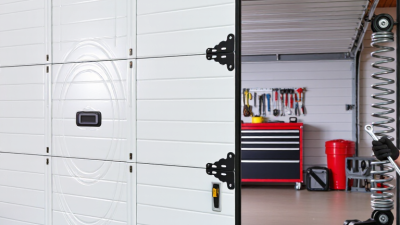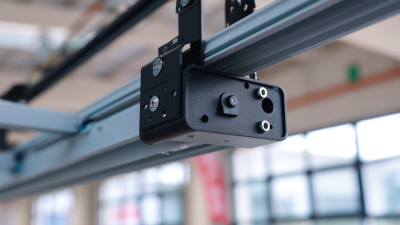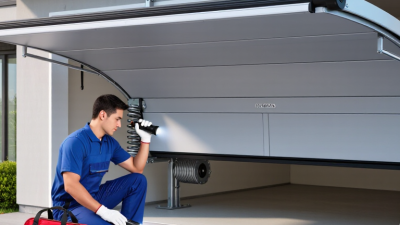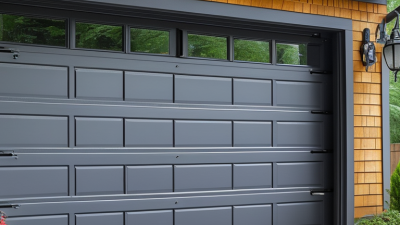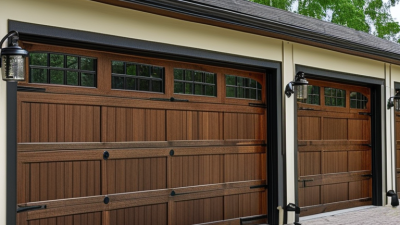
A garage door may look simple from the driveway, yet dozens of parts work together above your head. Springs carry tension. Rollers guide movement. Cables, drums, tracks, hinges, panels, seals, handles, openers, and safety sensors each serve a specific purpose. When one component wears out, the entire system can become noisy, uneven, or unsafe.
Home-improvement authority Bob Vila has described the garage door as “the largest moving part in your home.” That observation explains why choosing garage door parts requires more than matching color or price. Buyers should check measurements, weight ratings, material quality, compatibility, and installation requirements. A residential torsion spring cannot automatically replace an extension spring. A decorative roller may not suit a heavy insulated door. Small differences matter.
This guide examines ten common garage door parts and explains what buyers should inspect before ordering. It focuses on practical details, including rust around brackets, cracked hinges, frayed lift cables, and light gaps beneath weather seals. These visible clues often reveal deeper wear. Still, a neat checklist can mislead. Some failures remain hidden until the door moves. Spring and cable systems also store serious energy, so uncertain repairs deserve assessment from a qualified garage door technician.
The goal is not to encourage unnecessary replacement. It is to help homeowners ask better questions, compare suitable components, and recognize when professional service is the wiser choice. Parts vary by door design, manufacturer, climate, and usage frequency. The right purchase begins with accurate identification.
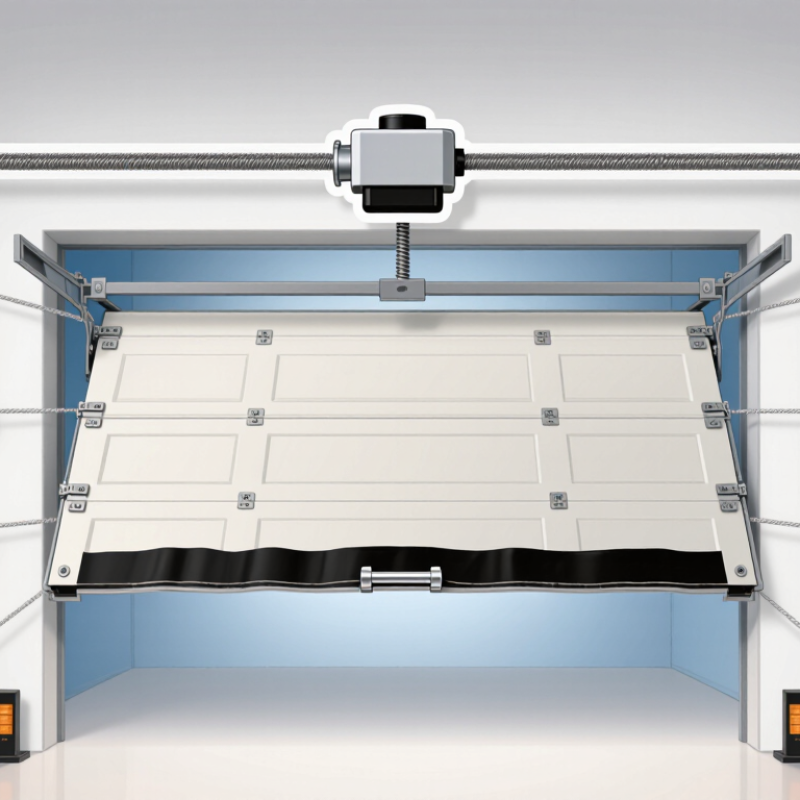
Garage door parts are a working system, not isolated hardware. The ten common types include panels, tracks, rollers, hinges, torsion springs, extension springs, lift cables, drums, mounting brackets, and safety sensors. Each part controls movement, balance, or protection. Panels form the door’s barrier. Tracks guide its path. Rollers reduce friction inside those tracks. Hinges let sectional panels bend as the door rises.
Springs carry much of the door’s weight. A torsion spring twists around a shaft, while extension springs stretch beside horizontal tracks. Lift cables transfer spring force to the bottom brackets. Drums wind those cables evenly. The opener moves the door, but it should not carry the entire load. Safety sensors use an invisible beam near the floor. If that beam breaks, the opener should reverse.
The U.S. Consumer Product Safety Commission has repeatedly identified entrapment protection as a critical garage-door safety issue. Current opener standards also require automatic reversal and obstruction testing. Follow the manufacturer’s instructions and applicable safety standards. The U.S. Department of Energy reports that air leakage can account for 25% to 35% of energy used for heating and cooling. A damaged bottom seal may therefore affect comfort, not only pests and dust. Grand View Research’s 2024 garage-door market report projects continued market growth through 2030, increasing demand for replacement components. Still, market growth does not make every part universal. I have seen small roller or spring differences cause noisy, uneven travel. That detail is easy to underestimate. Tensile springs and lift cables can release dangerous energy, so trained technicians should handle them.
Garage door parts do more than open and close the door. They carry weight, control movement, and protect the opening from weather. Door panels form the main barrier, while vertical and horizontal tracks guide their travel. Each track must stay aligned with the rollers. A small bend can create scraping, vibration, or uneven movement.
Hinges connect individual panels and allow them to curve around the tracks. Rollers reduce friction, but worn rollers can make the door sound harsh. Springs balance the door’s weight, while lift cables transfer force between the springs and bottom brackets. These components work under substantial tension. Do not adjust springs or cables without proper training. A mistake can cause serious injury.
The bottom seal blocks rain, dust, and insects from entering beneath the door. Brackets hold critical parts against the frame, so loose fasteners deserve attention. During inspection, look for rust, cracked hinges, frayed cables, and gaps along the seal. Listen for grinding or sudden popping sounds. Strange noises matter.
A common mistake is judging a part by appearance alone. A clean cable may still be weakened internally. I once underestimated how much a slight track shift could affect closing pressure. That assumption was wrong. Professional inspection is sensible when the door feels heavy, stalls, or drops unevenly. Clear records of repairs also help identify repeated structural problems.
Top 10 Types of Garage Door Parts Buyers Need to Know
A garage door moves through a coordinated system, not a single mechanism. The torsion spring stores lifting energy above the door, while cables transfer that force to the bottom brackets. Rollers travel inside vertical and horizontal tracks. Hinges connect each panel and allow controlled bending at the turns. End bearings support the spring shaft, while drums guide the cables. Small parts matter.
DASMA Technical Data Sheet 165 identifies 10,000 cycles as a common baseline for residential spring-life ratings. One cycle means opening and closing the door once. A household using the door four times daily reaches that figure in roughly seven years. Real conditions vary. Rust, poor balance, and temperature can shorten service life. I once treated a noisy roller as a minor annoyance; the worn bearing later damaged the track.
Balance is the practical test. A correctly adjusted door should stay near mid-height when manually lifted, without dropping or rising sharply. CPSC safety guidance also requires automatic reversal and photoelectric protection for powered openers. Under UL 325 requirements, the door should reverse when sensors detect an obstruction. These devices do not replace sound cables, springs, brackets, or hinges. Buyers should inspect frayed cables, stretched springs, loose fasteners, and bent tracks before selecting replacement parts. The part number matters, but so do door weight, height, panel design, and cycle rating. A universal fit is often an optimistic assumption.
| No. | Part Type | Primary Function | How It Moves or Works | Typical Location | Key Buyer Specifications | Common Wear Indicators |
|---|---|---|---|---|---|---|
| 1 | Torsion Springs | Stores mechanical energy and counterbalances the weight of the garage door. | The spring twists on a stationary shaft as the door closes and releases stored energy as the door opens. | Above the door opening, mounted on a torsion shaft. | Inside diameter, wire diameter, spring length, winding direction, door weight, and rated cycle life. | Visible separation in the coil, excessive rust, a loose spring, or a door that feels unusually heavy. |
| 2 | Extension Springs | Counterbalances the door by stretching and releasing stored energy. | The springs extend when the door closes and contract as the door opens. | Along the horizontal tracks, normally one spring on each side. | Extended and relaxed length, wire size, spring rate, safety containment, and door weight. | Gaps in the coil, stretching beyond normal length, rust, deformation, or uneven door movement. |
| 3 | Lift Cables | Transfers spring force to the bottom of the door and helps lift it evenly. | The cable winds around a drum as the door rises and unwinds as it lowers. | At both sides of the door, between the bottom brackets and cable drums. | Cable diameter, length, construction, end fitting, drum compatibility, and door height. | Fraying, broken strands, kinks, rust, slack cable, or cable that has come off the drum. |
| 4 | Cable Drums | Guides and winds the lift cables while converting shaft rotation into vertical door movement. | The drums rotate with the torsion shaft and collect or release the cables in controlled grooves. | At each end of the torsion shaft above the door. | Drum profile, cable size, lift type, shaft diameter, door height, and weight capacity. | Worn grooves, cracks, excessive cable overlap, wobbling, or uneven cable winding. |
| 5 | Garage Door Rollers | Allows the door sections to travel smoothly inside the vertical and horizontal tracks. | Wheels rotate on their stems while rolling through the track during opening and closing. | Mounted in the end hinges and side brackets of each door section. | Wheel diameter, stem length, bearing type, wheel material, track compatibility, and number of rollers. | Grinding noise, flat spots, cracked wheels, excessive side play, or rollers that bind in the track. |
| 6 | Vertical and Horizontal Tracks | Provides the guided path that controls the door’s travel from closed to open position. | The rollers travel along the vertical tracks, curve through the transition, and continue along the horizontal tracks. | On both sides of the door opening and beneath the ceiling when the door is open. | Track profile, width, radius, length, door height, roller size, and mounting configuration. | Dents, loose fasteners, misalignment, rust, separated joints, or rollers rubbing against the track. |
| 7 | Hinges | Connects door sections and allows each section to pivot as the door follows the track curve. | The hinge leaves pivot around their pins while the door bends between the vertical and horizontal positions. | Between door sections, with heavier-duty hinges commonly used near the sides. | Door section design, hinge position, mounting-hole pattern, gauge, and roller-stem compatibility. | Cracked or bent leaves, loose screws, worn hinge pins, noisy pivots, or gaps between sections. |
| 8 | Bottom Brackets | Anchors the lift cable to the bottom door section and supports the lower roller assembly. | Moves with the bottom section and transfers cable tension into the door structure. | At the lower corners of the garage door. | Door construction, cable attachment method, roller-stem size, mounting pattern, and bracket orientation. | Cracks, distortion, loose fasteners, damaged cable attachment points, or movement at the lower corners. |
| 9 | Bearing Plates and End Bearings | Supports the torsion shaft and allows it to rotate with reduced friction. | The shaft rotates inside or through the bearing while spring and cable forces are transferred through the assembly. | At the ends of the torsion shaft, usually mounted above the door. | Plate configuration, shaft diameter, bearing dimensions, mounting-hole spacing, and load capacity. | Squealing, grinding, visible play, shaft drag, rust, or a bearing that feels rough when rotated. |
| 10 | Door Struts | Reinforces wide or heavy door sections and helps limit bending during operation. | The strut moves with the door section while resisting flexing and distributing operational loads. | Mounted horizontally across one or more door sections. | Door width, strut length, profile, steel thickness, mounting method, and required reinforcement level. | Bending, loose fasteners, corrosion, separation from the door section, or visible panel flex. |
Power, control, and safety parts determine how a garage door behaves every day. The motor supplies movement, while the drive system transfers that force to the door. Torsion or extension springs balance its weight. These springs deserve professional attention. Their stored energy can cause severe injury if handled carelessly.
Control components include the wall console, remote transmitters, receiver, circuit board, and limit switches. A responsive control system should open smoothly and stop at the correct positions. During an inspection, I check for delayed responses, unusual clicking, and loose wiring. Small symptoms often become expensive failures. A clean power supply matters too. Battery backup can keep the door usable during an outage, but its battery may weaken quietly.
Safety components must interrupt movement when danger appears. Photoelectric sensors should face each other and sit at the correct height. The reversing mechanism should respond to light resistance, not excessive force. Test it regularly. A door can look reliable while its safety system fails. Dust, sunlight, bent brackets, or a poorly aligned sensor may create that problem. My checklist is useful, but never perfect. Weather, age, and installation quality can change results. Keep fingers away from moving joints, and have a qualified technician examine damaged cables, springs, or electrical parts.
The chart compares commonly purchased garage door parts by typical replacement interval. Springs, cables, rollers, hinges, tracks, opener components, and safety devices have different service lives depending on usage, installation quality, weather exposure, maintenance, and door weight. These figures are general industry ranges rather than brand-specific specifications.
Choosing garage door parts starts with the door’s symptoms, not its appearance. The ten common parts include torsion springs, extension springs, lifting cables, drums, rollers, hinges, tracks, mounting brackets, weather seals, and safety sensors. Each part affects movement, balance, or protection from outdoor air. A noisy door may need new rollers. A crooked door may point to worn hinges or damaged tracks. The wrong size can create bigger problems.
Inspect the door while it is closed and disconnected from automatic operation. Look for frayed cables, rusty springs, bent tracks, cracked rollers, and loose fasteners. Press the weather seal gently. It should remain flexible, not crumble like dry rubber. Test the safety sensors with a safe object, never your hand. Keep fingers away from springs and cable drums. These parts store serious tension. Professional help is the sensible choice for spring replacement.
Measure the old part carefully. Record roller diameter, hinge position, spring length, cable length, and track shape. Match function, dimensions, and load rating. Do not choose by color alone. During replacement, photograph each connection before removal. That small habit prevents confusion later. I once trusted a nearly matching roller, and the door still dragged. It looked acceptable, but its stem length was wrong. Small mistakes matter. After installation, test the door manually and watch for uneven lifting, scraping, or sudden movement. Recheck every fastener after several cycles.