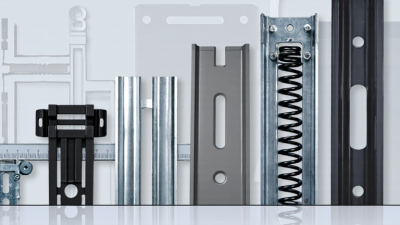
What Are the Top 10 Garage Door Bracket Types?

When a garage door rises, small metal fittings help guide and support its movement. The garage door bracket is one of those easily overlooked parts, yet its shape and position can affect how the door’s panels, rollers, tracks, or opener connect. Some brackets are visible near the track; others sit at panel joints or reinforce the opener attachment. The names can be confusing, and designs vary by door model. Small differences matter. A bracket that looks similar may not fit or carry loads in the same way.

This guide introduces ten common types, including hinge, flag, jamb, track, top, bottom, and opener-reinforcement brackets. It explains where each is typically found, what it connects, and which details to check when identifying a replacement. A quick visual match is not enough; compare the part with the door manufacturer’s specifications and inspect its mounting points. Bottom brackets may connect to high-tension lift cables, so avoid removing or adjusting them without qualified help. That distinction matters. Even a clear diagram cannot show every variation in an older or custom door. Use the overview as a starting point, not a substitute for an inspection when parts are bent, loose, or worn.
What Are the Top 10 Garage Door Bracket Types?

Understanding the Role of Brackets in Garage Door Systems

Garage door brackets are small fittings with important jobs. They help hold tracks in position, guide rollers, connect door sections, and support hardware that transfers force. A hinge bracket lets panels pivot as the door rises. Track and jamb brackets secure the track to the frame, while flag brackets join vertical and horizontal track sections.

Different parts carry different loads. Top fixture brackets hold upper rollers; bottom brackets connect lower rollers and lift cables. End-bearing and center-bearing brackets support the torsion shaft as it turns. Opener reinforcement brackets spread the opener’s pulling force across a panel, and strut-support brackets help limit flex on wide sections. These ten types are not interchangeable. Even a sound-looking bracket can hide a loose fastener or a hairline crack.

The details matter. A track bracket set at the wrong angle can make rollers rub or bind. A bent hinge may leave a visible gap between panels. Bottom brackets deserve special caution because their cables can remain under high tension; they are not routine adjustment points for an untrained homeowner. From a practical inspection, look for rust, shifting fasteners, distorted metal, and uneven roller travel. A quick glance is useful, but it cannot confirm every connection is secure.

How Bracket Design Varies by Position and Function

Garage door brackets are positioned around the door’s load path, so shape follows function. At the bottom corners, lift-cable brackets carry concentrated tension and need secure attachment to the door. Top fixtures connect the upper panel to the roller system. Center and end hinges join panels, while flag, jamb, track, and angle brackets support or locate the tracks. Operator-reinforcement brackets spread opener forces across a panel. Small differences matter.

ANSI/DASMA 102-2018, an industry standard for sectional garage doors, includes a 10,000-cycle durability test. That figure evaluates door-system endurance; it does not guarantee every bracket will last that long. Bracket selection still depends on door weight, track geometry, panel construction, and the maker’s specified hardware. A heavy-looking bracket is not automatically the right one.

Look for practical details: slotted holes allow alignment, formed edges resist flexing, and corrosion-resistant finishes suit damp garages. Bottom fixtures deserve particular care because they connect to lift cables under tension. Never treat them as ordinary trim. A worn hinge may show oval screw holes or a panel that shifts unevenly. Real installations can be less tidy than diagrams; that’s worth checking. A qualified door technician can verify fit, fasteners, and alignment against the door’s documentation.

The 10 Main Types of Garage Door Brackets

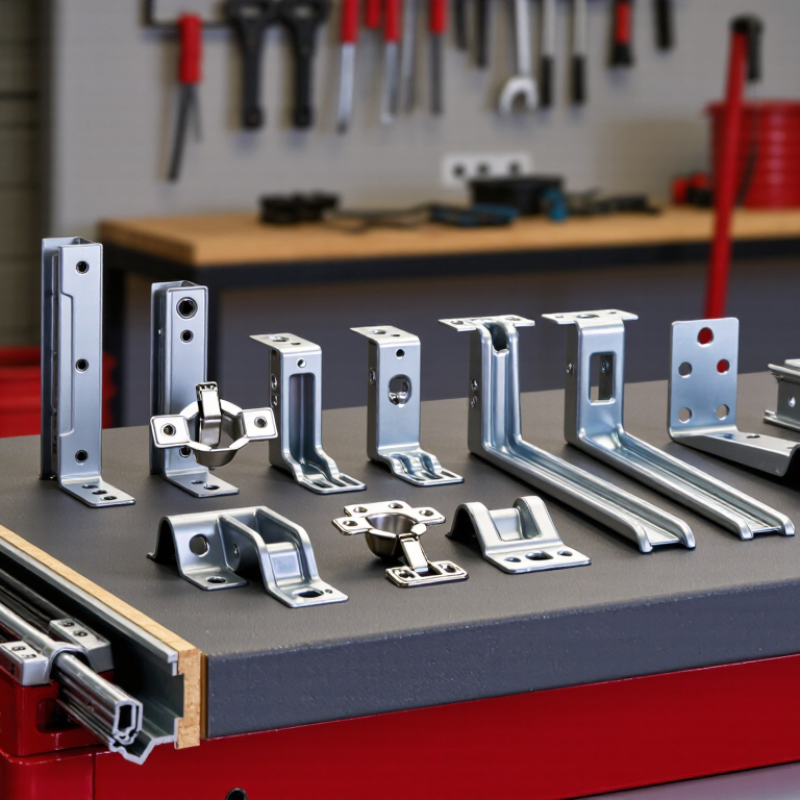
Garage doors rely on small steel parts to keep panels aligned and moving. The ten main bracket types are bottom fixtures, top fixtures, end hinges, center hinges, flag brackets, vertical-track brackets, horizontal-track brackets, jamb brackets, operator reinforcement brackets, and spring anchor brackets. Bottom fixtures connect lifting cables, so damage there deserves prompt attention. Top fixtures guide the upper panel; hinges let sections bend as the door follows its track. Small parts matter. Track and jamb brackets secure the rail system to the building, while flag brackets join track sections near the upper corners. Spring anchor brackets hold components under substantial tension and are not casual repair points.

The remaining types serve specific jobs: center hinges support panel joints, end hinges guide panel edges, and operator reinforcement brackets spread opener force across a panel. Designs vary by door weight, track layout, and manufacturer specifications, so a bracket’s shape alone cannot confirm compatibility. DASMA’s technical guidance treats sectional doors as coordinated systems; matching hardware to the door’s construction matters.

Grand View Research’s 2024 garage-door market report estimated the global market at about USD 6.3 billion in 2023, reflecting the scale of installed equipment—not a measure of bracket failure rates. I still find that simple visual checks can miss a loose fastener.

For spring-related or cable-connected brackets, use a qualified door technician rather than adjusting loaded hardware yourself.

Choosing Brackets for Different Door Styles and Hardware

What Are the Top 10 Garage Door Bracket Types?

Choosing brackets starts with how the door moves, not how it looks. Sectional doors commonly use bottom fixtures for lift cables, top fixtures for upper rollers, and hinges between panels. End hinges carry rollers at panel edges; intermediate hinges connect panels without carrying track rollers. That matters. A one-piece tilt-up door needs pivot hardware instead, so sectional-door brackets are not a safe swap.

Track geometry narrows the choice. Flag brackets connect vertical and horizontal tracks, while jamb brackets fasten track to the framing. Angle brackets brace the track; low-headroom brackets reposition rollers where ceiling clearance is tight. Reinforcement brackets stiffen the top panel where an opener arm attaches. Spring-anchor plates must match the spring arrangement. Carriage-house appearance alone does not determine hardware; the door’s construction and track layout do. I would check those before ordering.

DASMA wind-load guidance treats the door and its supporting hardware as a coordinated system, not isolated parts. Match brackets to door weight, track shape, fasteners, and the manufacturer’s installation specifications. The 2024 Journal of Light Construction Cost vs. Value report recorded 194% cost recoup for garage-door replacement nationally. That measures resale value, not bracket durability. A useful distinction. For a damaged or heavily loaded assembly, have a qualified installer verify the setup rather than guessing from a photo.

Checking Compatibility and Safety Before Replacement

Garage door brackets may look interchangeable, but their shape reflects a specific load and track position. Flag brackets, track brackets, hinges, end-bearing plates, and bottom fixtures do different jobs. Before replacing one, match its location, bolt spacing, gauge, and door-track arrangement. ANSI/DASMA 102-2018 covers sectional garage-door construction and performance; it is a useful reference, but it does not make every bracket universal. A close visual match can still be wrong.

Safety matters most around spring-connected hardware. A bracket near a torsion spring or cable may carry stored force, so do not loosen it just to check the fit. UL 325 addresses entrapment protection for door operators. The U.S. Consumer Product Safety Commission recommends testing reversal monthly with a 1.5-inch-high object beneath the door. That simple check does not confirm bracket strength, though. I used to assume a thicker-looking part was automatically safer; dimensions and attachment points matter more.

Tips: Photograph the old bracket in place, then measure hole spacing and track width. Check for cracked metal, elongated holes, loose fasteners, and rust. If the part connects to a spring or lifting cable, stop and ask a trained door technician to identify it. Guessing here is not worth the risk.

10 Common Garage Door Bracket Types and Their Typical Functions

A functional guide to help identify bracket types before checking replacement compatibility.

A value of 1 indicates a typical function; 0 indicates it is not usually a primary function. Bracket designs vary by door system, so compare the part’s shape, mounting pattern, track, and door specifications before replacement. Bottom brackets are connected to lift cables under high tension—do not remove or adjust them while the door is under load.