Top Garage Door Bracket Types for Global Buyers

Choosing the right garage door bracket can determine whether a door moves smoothly or strains every morning. Global buyers face different climates, door weights, track profiles, and installation practices. A bracket that performs well in a dry warehouse may corrode quickly near a coastal port.

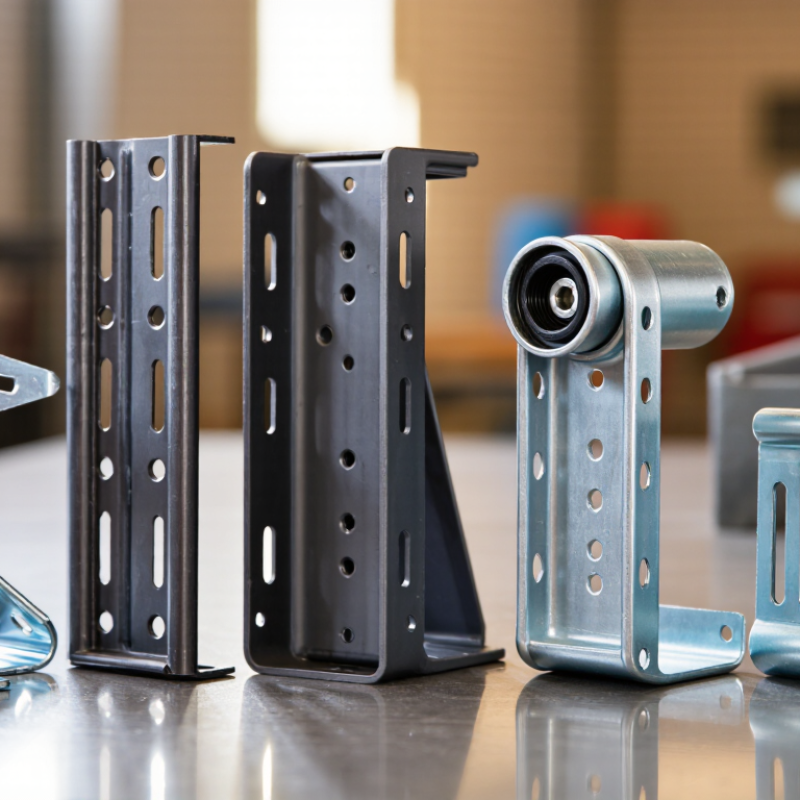
Garage door systems specialist Daniel R. Cole explains, “A bracket is small, but its alignment controls the door’s daily movement.” This practical view matters. Buyers should examine flag brackets, vertical track brackets, jamb brackets, top roller brackets, and adjustable reinforcement brackets. Each type serves a different connection point. Small part. Large consequence.

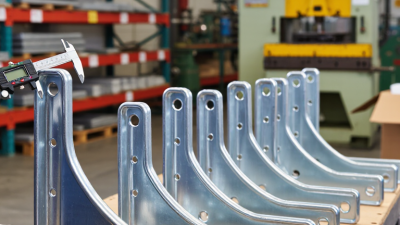
Material deserves close attention. Zinc-plated steel suits many indoor applications. Hot-dip galvanized steel offers stronger protection in humid regions. Stainless steel may be preferable near saltwater, although its higher cost can challenge budget planning. Check the steel thickness, bolt pattern, hole spacing, load rating, and compatibility with the complete door system. Do not rely on appearance alone.

International buyers should also confirm packaging quality and technical documentation. Clear drawings can prevent mismatched holes and delayed installation. Metric and imperial measurements create avoidable confusion. A supplier’s sample bracket may look correct, yet fail during field fitting. That possibility deserves honest consideration.

No bracket works universally. Door weight, spring configuration, track angle, and wall material can change the selection. Buyers should request dimensional drawings and installation guidance before placing large orders. Reliable sourcing is not only about price. It is about repeatable fit, corrosion resistance, verified specifications, and support after delivery.
Top Garage Door Bracket Types for Global Buyers

Garage Door Bracket Types by Function: Track, Flag, Jamb, Roller, and Strut

Top Garage Door Bracket Types for Global Buyers

Garage door brackets support different loads and guide moving hardware. Track brackets hold horizontal or vertical tracks in position. They need accurate spacing, firm fasteners, and enough adjustment for installation tolerances. A small alignment error can make rollers scrape or bind. Measure the track width before ordering. Do not rely only on photographs.

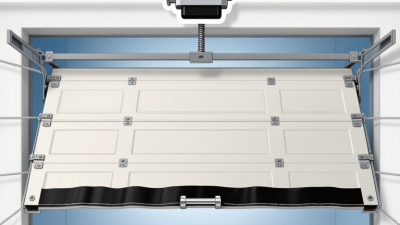
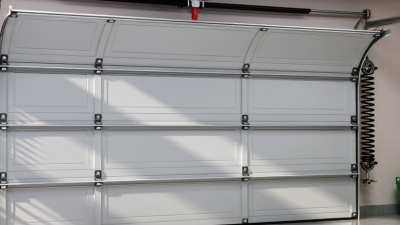
Flag brackets connect the vertical track to the upper horizontal track. They often carry considerable tension near the door’s top section. Jamb brackets secure the vertical track to the wall or door frame. Their hole patterns and depth ranges vary widely. Check the available mounting surface, fastener size, and bracket gauge. Thin steel may look acceptable but can deform under repeated movement.

Roller brackets hold the rollers that travel inside the tracks. Their shape must match the roller stem and section design. Strut brackets, or reinforcement struts, strengthen wide door sections against bending. They are especially useful where wind pressure or heavy insulation adds stress. I have seen buyers select a strut by length alone. That is not enough. Confirm the steel thickness, hole spacing, coating, and expected load. Galvanized finishes can help resist moisture, but coating quality still differs between suppliers. Request drawings, sample measurements, and test information before placing a large international order. Product documentation is sometimes incomplete. That deserves a second check.

Load Ratings and Steel Gauges: Applying DASMA 102 and ASTM Requirements

Garage door brackets are not interchangeable simply because they look similar. Their capacity depends on geometry, steel thickness, fastener spacing, and the complete door assembly. DASMA 102 emphasizes matching hardware to documented design loads, especially where wind pressure affects the end stiles, hinges, and vertical tracks.

Steel gauge provides a useful starting point, but it is not a load rating. Common 20-gauge steel is approximately 0.9 mm thick, while 18-gauge steel is about 1.2 mm. Actual thickness can vary by tolerance and coating. ASTM A653/A653M defines galvanized sheet requirements, including coating mass and mechanical properties. ASTM A1008/A1008M covers cold-rolled carbon steel sheet. Neither standard alone certifies a bracket’s finished capacity.

Ask suppliers for tested working loads, safety factors, and installation limits. A 500-pound door does not place 500 pounds on one bracket. Load transfers through hinges, rollers, tracks, and fasteners. This detail is often missed. For coastal or high-wind projects, request calculations based on site pressure, opening size, and attachment substrate. ASTM test methods can verify material strength, yet real performance still depends on screw pullout and local deformation. I would not select a bracket from gauge alone; that shortcut needs rethinking. A stamped rating and traceable test report offer stronger evidence than a thicker-looking flange.

Top Garage Door Bracket Types for Global Buyers

Load Ratings and Steel Gauges: Applying DASMA 102 and ASTM Requirements

This comparison uses nominal U.S. sheet-steel gauges commonly specified for garage door hardware: 16 gauge ≈ 1.5 mm, 14 gauge ≈ 1.9 mm, and 12 gauge ≈ 2.7 mm. The load figures are representative engineering-selection benchmarks in kN, converted from commonly used pound-force ranges. Final selection should be verified against the complete door assembly, fasteners, safety factors, applicable DASMA 102 guidance, and relevant ASTM material and test requirements.

Top Roller and Bottom Brackets: Adjustability, Cables, and Safety Containment

Top Garage Door Bracket Types for Global Buyers

Top roller brackets guide the door’s upper section through the vertical track. Their adjustable designs help align rollers when tracks vary slightly. Slotted holes can correct small spacing errors, but they do not increase the bracket’s load rating. Buyers should check steel thickness, roller-shaft diameter, fastener size, and corrosion resistance. A coastal warehouse needs stronger protection than a dry inland workshop. The details matter.

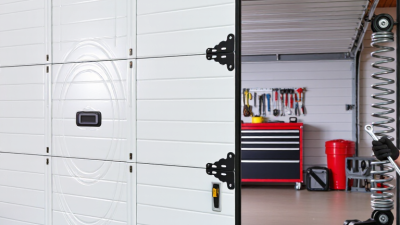
Bottom brackets carry substantial door tension and anchor the lift cables. Their cable-retention features should keep the cable seated during normal travel and reduce exposure near moving parts. A loose cable can whip, unwind, or leave the door uneven. The U.S. Consumer Product Safety Commission has cited approximately 20,000 garage-door-related injuries treated annually, showing why containment deserves serious attention. CPSC safety guidance also emphasizes regular inspection and testing of automatic door systems. Bracket selection is only one control.

DASMA technical guidance treats bracket and cable connections as safety-critical components, not ordinary hardware. Global buyers should request tested load data, installation limits, and corrosion classifications from suppliers. Metric and imperial fasteners can look similar but fit differently. That mistake is common. Adjustable top brackets are useful, yet excessive adjustment may weaken alignment or create roller binding. I would also verify cable diameter against the bottom bracket’s groove, because catalog descriptions sometimes omit this detail. Grand View Research valued the global garage door market at about USD 3 billion in 2023, reflecting a broad supply chain with uneven quality. A documented inspection plan remains essential.

Reinforcement Brackets for Heavy Doors, Wind Loads, and Automatic Operators

Top Garage Door Bracket Types for Global Buyers

Reinforcement Brackets for Heavy Doors, Wind Loads, and Automatic Operators

Heavy garage doors need more than standard track supports. Reinforcement brackets transfer door weight into the wall, ceiling, and structural framing. Vertical track brackets, end bearing plates, and operator support brackets are common choices. Each part should match the door’s mass, track geometry, and opening width.

Wind resistance also requires careful engineering. ASCE/SEI 7-22 calculates velocity pressure with the formula 0.00256V² psf. At 120 mph, pressure reaches about 36.9 psf before adjustment factors. NOAA’s 2023 disaster report recorded 28 U.S. billion-dollar weather events, showing why wind exposure deserves attention. Coastal and typhoon-prone sites need rated brackets, stronger anchors, and continuous load paths. A thicker bracket alone may not solve failure. The wall connection can still pull out.

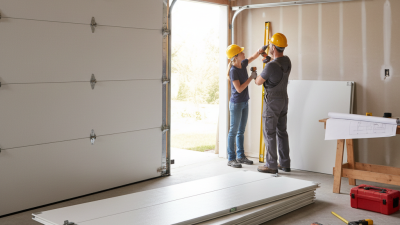
Tips: Check the tested wind rating, not only steel thickness. Confirm anchor type, spacing, and substrate strength. Automatic operators create vibration and repeated loading. UL 325 addresses operator safety, but it does not prove bracket capacity. In field inspections, missing ceiling reinforcement appears often. It is an easy detail to overlook. I would request stamped calculations for unusually wide, heavy, or high-wind doors. Local codes differ, and this judgment can be imperfect. Recheck the installation against the approved drawings before energizing the operator.

Top Garage Door Bracket Types for Global Buyers - Reinforcement Brackets for Heavy Doors, Wind Loads, and Automatic Operators
Bracket Type Typical Application Common Material Typical Thickness Typical Load Range* Key Design Features Best Selection Criteria
Standard End Bearing Plate Residential sectional doors using torsion-spring assemblies and standard horizontal tracks. Galvanized or zinc-plated carbon steel 2.0–3.0 mm Approximately 90–180 kg per pair, subject to fastener and structure capacity Pre-punched mounting holes, bearing seat, compact profile, and compatibility with common torsion tubes. Choose a plate with sufficient bearing diameter, corrosion protection, and mounting holes that align with the structural support.
Heavy-Duty End Bearing Bracket Large sectional doors, insulated doors, high-cycle applications, and doors with heavier hardware. Formed or laser-cut carbon steel 3.0–6.0 mm Approximately 180–450 kg per pair, depending on geometry and anchorage Reinforced gussets, larger bearing support, deeper side flanges, and increased fastener spacing. Use when the door mass, spring torque, or operating frequency exceeds the rating of a standard end plate.
Vertical Track Wall-Mount Bracket Securing vertical tracks to masonry, steel frames, or timber jambs on sectional doors. Galvanized steel or powder-coated steel 2.5–4.0 mm Approximately 100–300 kg per pair, dependent on anchor design Slotted adjustment holes, multiple anchor points, track alignment control, and reinforced return flanges. Verify jamb construction, anchor pull-out resistance, track size, and required adjustment range.
Wind-Load Reinforcement Bracket Sectional or rolling doors installed in regions exposed to high wind pressure or severe weather. Hot-dip galvanized or corrosion-resistant steel 3.0–6.0 mm Project-specific; commonly engineered for approximately 1.0–3.0 kPa design pressure Multiple structural attachment points, stiffening ribs, wider bearing surfaces, and improved resistance to track spreading. Match the bracket system to the building code, calculated wind pressure, door size, span, and approved anchorage details.
Operator Reinforcement Bracket Supporting automatic garage-door operators mounted to the top section of a sectional door. Galvanized steel or powder-coated steel 2.5–4.0 mm Approximately 50–150 kg static support capacity, subject to operator and door design Wide load-distribution plate, multiple fastener locations, compatibility with operator arm connections, and reduced panel flexing. Select a bracket that transfers operator force into the door stiles or structural members rather than only the thin door skin.
Top Roller Carrier Bracket Adjustable top roller support for sectional doors where the top panel angle or track position requires alignment. Galvanized steel 2.0–3.0 mm Approximately 25–75 kg per roller assembly Adjustable roller stem position, slotted holes, formed edges, and smooth movement through the curved track transition. Check roller stem diameter, track profile, panel construction, and available adjustment without causing cable or panel interference.
Bottom Fixture Reinforcement Bracket Supporting bottom rollers and lifting cables on heavier sectional doors. Galvanized or stainless steel 3.0–5.0 mm Approximately 75–250 kg per pair, depending on cable and fastener arrangement Reinforced cable attachment zone, enclosed or guarded cable path, broad panel contact area, and high-strength fasteners. Confirm cable diameter, drum arrangement, roller stem size, panel profile, and protection against cable disengagement.
Track-to-Ceiling or Roof Support Bracket Suspending horizontal tracks from ceiling framing or roof structures on sectional doors. Slotted angle steel or formed galvanized steel 3.0–6.0 mm Approximately 100–350 kg per pair, depending on support spacing and anchorage Adjustable mounting slots, triangulated support options, anti-sway reinforcement, and compatibility with horizontal track dimensions. Design the support for the combined door, track, operator, and dynamic loads; attach only to verified structural members.
Rolling Door Guide Reinforcement Bracket Reinforcing guide rails and wall connections for rolling or rolling-service doors. Galvanized steel or stainless steel 3.0–6.0 mm Project-specific; commonly selected for approximately 1.0–2.5 kPa design pressure Continuous or closely spaced wall connections, guide-retention features, stiffened returns, and corrosion-resistant finishes. Use the calculated wind pressure, curtain weight, guide dimensions, wall substrate, and required operational cycle as the basis for selection.
Selection note: The load ranges above are typical purchasing guidelines rather than universal certifications. Actual capacity depends on bracket geometry, steel grade, fastener size, anchor spacing, door weight, operating cycles, wind pressure, substrate strength, and installation quality. Final selection should follow the applicable local building code and the door manufacturer's engineering requirements.

Global Compliance Guide: UL 325, EN 13241, CE Marking, and ISO 9001 Suppliers

Top Garage Door Bracket Types for Global Buyers

Global Compliance Guide: UL 325, EN 13241, CE Marking, and ISO 9001 Suppliers

Garage door brackets may be fixed, adjustable, flag-style, or reinforced for high-load tracks. Fixed brackets suit standard sectional doors and simple installations. Adjustable brackets help align tracks when walls or frames are uneven. Reinforced designs support heavier doors, but steel thickness alone does not prove safety.

UL 325 mainly addresses powered door and gate operators, entrapment protection, and control systems. A bracket can support a compliant system, but it does not make the whole system UL 325 compliant. EN 13241 covers performance and safety requirements for industrial, commercial, and garage doors. For European sales, CE marking requires the correct conformity process and technical documentation. The marking must match the applicable regulations and product function.

ISO 9001 shows that a supplier operates a quality management system. It is not a product safety certificate. Buyers should request material grades, load-test records, dimensional inspection reports, and traceability documents. Check whether the certificate scope covers manufacturing, not only trading activities. A certificate folder can look convincing, yet missing test conditions may weaken its value. I would also question unclear bracket ratings and copied declarations. Small gaps matter. Local installation rules still require careful review.