
Choosing the right Outdoor Advertising Flags can shape how quickly customers notice and remember your business. A well-designed flag should attract attention without creating visual clutter. It must also suit the location, weather, audience, and purpose of your campaign.
Start by considering where the flag will stand. A busy roadside may require bold colors and large lettering, while a quiet garden center may benefit from softer graphics. Fabric quality matters too. Look for weather-resistant polyester, reinforced stitching, and a stable base that fits the ground surface. Strong wind can turn a beautiful display into a safety concern.
Think about visibility from different distances. A clear logo and short message usually perform better than crowded text. Test the design from ten, twenty, and thirty meters away. Does the message remain readable? This simple check is often missed.
Practical experience also matters. Suppliers with verified material details, clear care instructions, and reliable customer feedback deserve closer attention. Ask about UV resistance, replacement parts, printing methods, and estimated outdoor lifespan. Product photographs can help, but they may not reveal stitching quality or base stability.
There is no perfect flag for every setting. A feather flag may move attractively in light wind, while a teardrop flag can offer a cleaner outline. The wrong choice can waste budget and weaken your brand presentation. Review local conditions before ordering.
Measure twice.
This guide explains how to compare shapes, materials, sizes, printing quality, and installation options. It also highlights common mistakes, because even experienced marketers sometimes prioritize appearance over long-term performance.
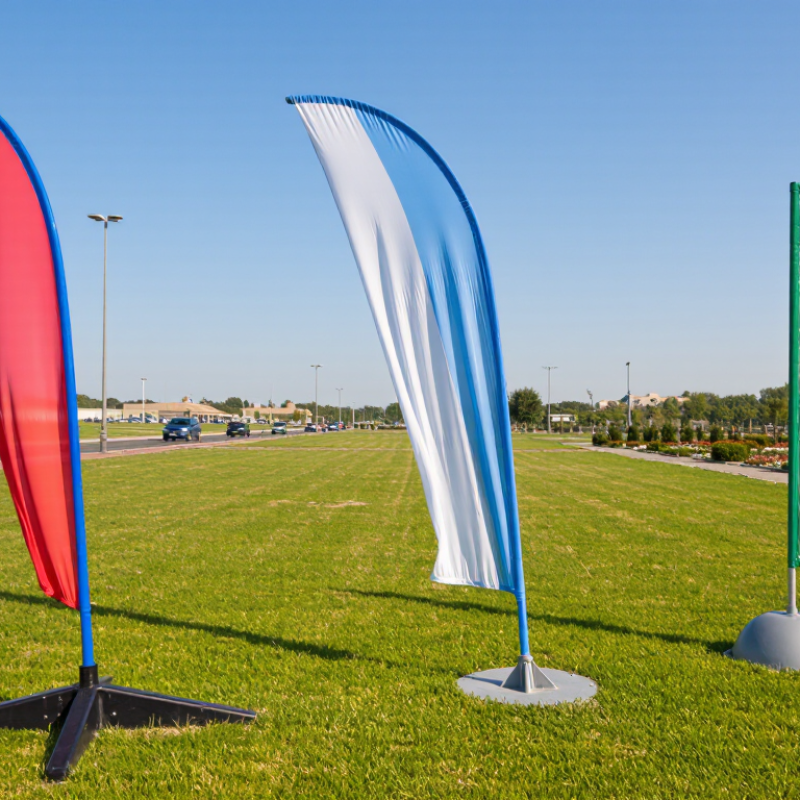
Outdoor advertising flags are portable signs designed to catch attention at street level. Feather, teardrop, and rectangular shapes suit different messages and locations. A feather flag beside a shop entrance can point visitors toward a doorway. At a weekend market, a compact flag can mark a stall without taking up much ground space. Flags also appear at sporting events, car parks, and temporary promotions.
Their value depends on visibility and placement, not just size. The Outdoor Advertising Association of America reported that U.S. out-of-home advertising revenue reached $9.1 billion in 2023, up 2.6% from 2022. This broad industry figure covers many formats, not flags alone. It suggests outdoor media remains a substantial channel, but it cannot predict how well one flag will perform. A flag partly hidden by parked cars may do little.
Tips: Match the flag height to viewing distance, and check that fabric, pole, and base suit local wind conditions. Keep the message brief; drivers and pedestrians often have only a few seconds to read it. For a narrow sidewalk, choose a stable base that does not obstruct foot traffic. Measure the site first. I’ve seen planning overlook nearby trees and signs; that simple mistake can block the design. Inspect the flag regularly for fading, loose stitching, and a wobbly base.
Choosing outdoor advertising flags starts with the display location, not the fabric. Visit the site at different times. A flag beside a busy road needs bold lettering and strong contrast. A flag near a walking path can use smaller details. Measure wind exposure, ground firmness, nearby signs, and viewing distance. I have seen attractive flags disappear behind parked vehicles. That mistake was avoidable. Check sightlines from a driver’s or pedestrian’s actual position. Weather also matters; wet ground, harsh sun, and repeated gusts can change your equipment needs.
Your audience should shape the message. Families at a community event may respond to friendly language and clear directions. Commuters usually need one quick idea, not a paragraph. Consider age, movement speed, and what people expect in that location. Advertising goals must be specific. Are you seeking visits, recognition, or immediate action? Use one prominent message and a readable call to action. Test the design from several distances. My first draft often looked clear on screen but weak outdoors.
Tips: Photograph the location before ordering. Mark the strongest viewing angles. Keep essential words near eye level. Use high-contrast colors, generous spacing, and durable bases suited to the surface. Review local placement rules and safety guidance. Do not assume a larger flag performs better; it may block another sign or become unstable. Ask someone unfamiliar with the campaign to describe what they notice in three seconds. Their answer may challenge your plan, which is useful.
| Display Location | Typical Audience | Viewing Distance | Recommended Flag Size | Wind and Surface Conditions | Primary Advertising Goal | Suitable Flag Style | Practical Setup | Success Metric |
|---|---|---|---|---|---|---|---|---|
| Retail storefront entrance | Pedestrians and local shoppers | 5–15 m | 2.5–3.5 m high | Moderate wind; paved ground | Increase walk-in traffic | Teardrop or feather flag | Use one flag on each side of the entrance; keep the message short and readable | Store visits, offer redemptions, and entrance conversion |
| Roadside business frontage | Drivers and passengers | 30–100 m | 4–5 m high | Open exposure; possible strong gusts | Improve visibility and wayfinding | Straight flag or tall feather flag | Place well inside the property line; use weighted bases and high-contrast lettering | Directional inquiries, branded searches, and site entries |
| Trade show or outdoor event | Qualified visitors and event attendees | 10–30 m | 3–4 m high | Temporary installation; grass, asphalt, or concrete | Attract attention and support lead generation | Teardrop or angled feather flag | Repeat one clear message across several flags; coordinate with booth signage | Booth visits, scanned contacts, and qualified leads |
| Sports field or tournament venue | Families, spectators, and participants | 20–60 m | 3.5–5 m high | Grass or artificial turf; changing weather | Build local awareness and sponsorship visibility | Feather flag or rectangular flag | Use ground spikes only where permitted; add water or cross bases on hard surfaces | Audience recall, website visits, and event-related inquiries |
| Construction or property development site | Passersby, prospective buyers, and contractors | 20–80 m | 4–5 m high | Dust, uneven ground, and exposed wind | Promote availability or provide directions | Straight flag with directional copy | Secure the base below pedestrian paths and inspect hardware regularly | Inquiries, scheduled visits, and QR-code scans |
| Restaurant, café, or food-service patio | Nearby pedestrians, commuters, and diners | 5–25 m | 2.5–3.5 m high | Moderate wind; limited sidewalk space | Promote a special offer or improve visibility | Compact teardrop flag | Select a narrow footprint; keep exits, ramps, and pedestrian routes clear | Coupon use, walk-ins, and offer-specific sales |
| Parking lot or vehicle service area | Vehicle owners and local customers | 15–50 m | 3–4 m high | Hard surface; vehicle movement nearby | Direct visitors to a service or entrance | Feather flag with directional arrow | Use stable weighted bases and position flags outside vehicle turning areas | Service appointments, arrivals, and directional questions |
| Public street or sidewalk activation | Dense pedestrian traffic and nearby workers | 3–20 m | 2.5–3 m high | Restricted space; local permit requirements may apply | Create short-term awareness or promote an event | Compact feather or teardrop flag | Check local rules first; avoid blocking accessibility routes and sight lines | Footfall uplift, event attendance, and QR-code engagement |
How to Choose the Best Outdoor Advertising Flags
Flag shape affects movement, readability, and stability. Feather flags create a tall, flowing profile that attracts attention from passing traffic. Teardrop flags remain taut, so short messages stay easier to read. Rectangular flags offer more usable space, but they may need stronger supports in windy areas. Choose the shape according to viewing distance, not appearance alone. A small flag can disappear beside a wide parking lot. A very large flag may become difficult to transport and install.
Tips: Measure the display area first. Leave room for people to walk safely. Check local wind guidance before selecting a base. Test your message from the actual viewing distance. It may look clear on a screen, yet fail outdoors.
Size should match both traffic speed and reader distance. Larger lettering usually performs better than crowded graphics. Polyester is a practical outdoor fabric because it dries quickly and handles regular handling. Knitted fabric allows airflow and reduces some wind pressure. Woven fabric can provide a sharper surface, but construction quality matters. Dye-sublimation printing produces vivid, durable graphics across the fabric. Screen printing can suit simple designs and limited colors. No material is perfect. Sun exposure, rain, folding, and poor storage can still shorten a flag’s life. Review the seams, pole connection, and base before ordering. A beautiful print cannot compensate for weak hardware.
Typical commercial specifications for common outdoor flag formats. Actual dimensions and fabric weights vary by supplier, pole system, and local wind conditions.
How to read the chart: Feather and teardrop flags generally provide greater vertical visibility, while rectangular and square flags offer broader horizontal layouts. Knitted polyester is commonly used for lightweight single-sided flags, woven polyester provides a smoother premium surface, and blockout polyester reduces show-through for double-sided graphics. Dye-sublimation is widely used for polyester because it produces durable, full-color graphics.
A flag system starts with the pole, not the printed fabric. Fiberglass poles flex under gusts and reduce sudden stress at the base. Aluminum poles feel more rigid, but they can transfer stronger loads downward. Select height according to pedestrian sightlines, nearby trees, and expected wind exposure. The Outdoor Advertising Association of America reported $9.1 billion in U.S. out-of-home advertising revenue in 2023. Visibility clearly matters, but stability protects that investment.
The base should match the surface and the crowd. A cross base suits smooth indoor flooring or calm outdoor areas. A water-filled base adds weight, but it needs draining before freezing weather. Ground spikes provide better resistance in soil, although hard ground can make installation difficult. Small wheels help reposition heavy units. They can also create unwanted movement. Check the locking mechanism carefully.
Mounting hardware deserves equal attention. A rotating connector keeps the flag readable from changing angles and reduces fabric twisting. Fixed mounts may work beside walls, but they need precise alignment. Use rated fasteners and inspect seams, poles, and anchors after strong weather. The World Out of Home Organization’s 2024 global expenditure report shows continued investment in outdoor media, yet hardware choices remain site-specific. There is no universal setup. Even experienced installers sometimes choose a base that is too light. Test it before public use.
Weather resistance should guide every flag decision. Look for UV-stable fabric, reinforced stitching, and rust-resistant poles. A flag may appear strong indoors but fade quickly beside a sunny road. Wind rating matters too. Lightweight flags can twist, flap loudly, or collapse during sudden gusts. No outdoor flag is truly weatherproof, and that assumption deserves a second look.
Tips: Check the forecast before installation. Use a weighted base on pavement and a ground spike in firm soil. Keep the flag clear of branches, wires, and vehicle paths. Test the setup by gently pulling the fabric from several directions. If the pole bends sharply, reduce tension or choose a stronger support.
Setup should take only a few minutes. Clear instructions, numbered sections, and tool-free connections reduce mistakes. Place the flag where people can read it without blocking sidewalks or sightlines. Allow the fabric to move freely. Constant rubbing against a wall can damage printed areas within days.
Ongoing care is simple but often neglected. Inspect seams, clips, and pole joints each week during busy seasons. Remove dust with cool water and mild soap. Avoid harsh chemicals and machine drying. Store the flag completely dry, loosely folded, and away from direct sunlight. I would not rely on visual inspection alone; small seam tears can become major failures after one storm. Replace worn hardware before it creates a safety problem.