How to Choose the Right Rolling Garage Door for Your Home?
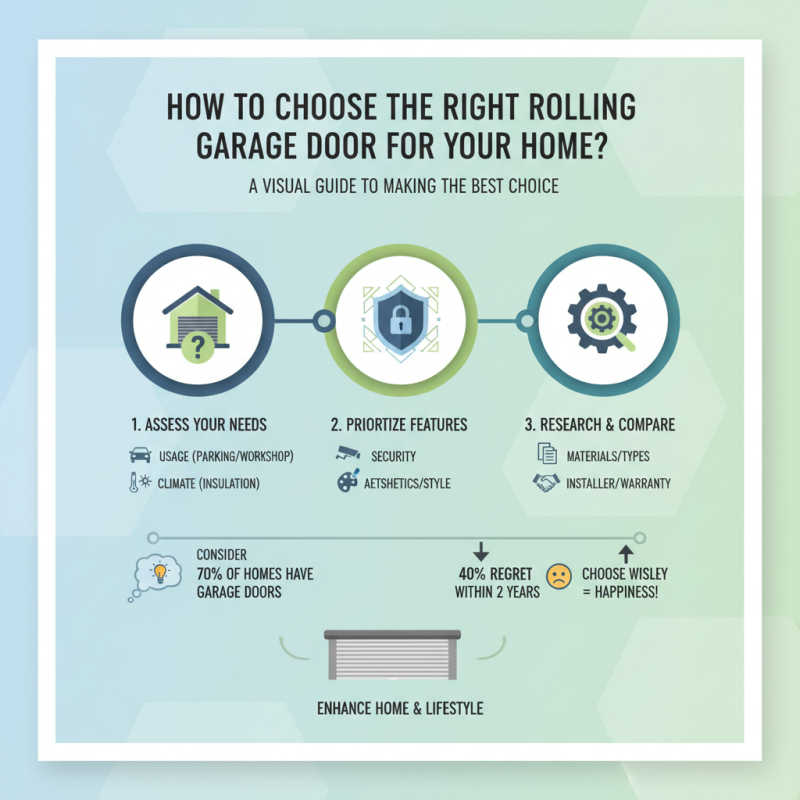
Choosing the right rolling garage door for your home can be challenging. With numerous options available, buyers need to understand their unique requirements. According to a report by the Garage Door Manufacturers Association, approximately 70% of American homes have garage doors. This indicates that a significant number of homeowners must consider style, security, and insulation when selecting a door.
Rolling garage doors are popular for their space-saving design and modern appeal. They can fit various architectural styles while providing convenience. However, selecting the wrong door can lead to issues like inadequate insulation or poor security. A survey revealed that 40% of homeowners regret their door choice within two years. This highlights the importance of thoughtful consideration.
Think about your lifestyle and garage usage. Will you use it as a workshop or just for parking? Will insulation matter in your climate? Such questions can guide you toward the best choice. A rolling garage door can enhance your home’s aesthetic and functionality if chosen correctly. Take your time, research, and explore options to avoid common mistakes.
Understanding the Basics of Rolling Garage Doors
When considering a rolling garage door, understanding the basics is essential. Rolling garage doors come in diverse materials and designs. Most are made of steel, aluminum, or fiberglass. Each material has distinct advantages. Steel offers strength but may rust without treatment. Aluminum is lightweight but can dent easily. Fiberglass is resistant to harsh weather but may require more maintenance.
Tips: Think about the climate in your area. If you live in a region with heavy rain, choose materials that can resist moisture. According to industry reports, over 60% of homeowners prefer insulated doors. Insulation helps with energy savings and temperature control.
Cost is another factor. Basic models can start from $400, while premium versions may exceed $2,000. Be aware that cheaper options may not provide the same durability. Investing up front can save costs in the long run. Installation costs also vary, with averages around $300 to $500.
Tips: Always get multiple quotes before deciding. Ask about warranty options and post-installation support. Small details that seem minor can become significant issues later. Choose wisely to avoid regrets.
Types of Rolling Garage Doors: Which One Suits Your Needs?
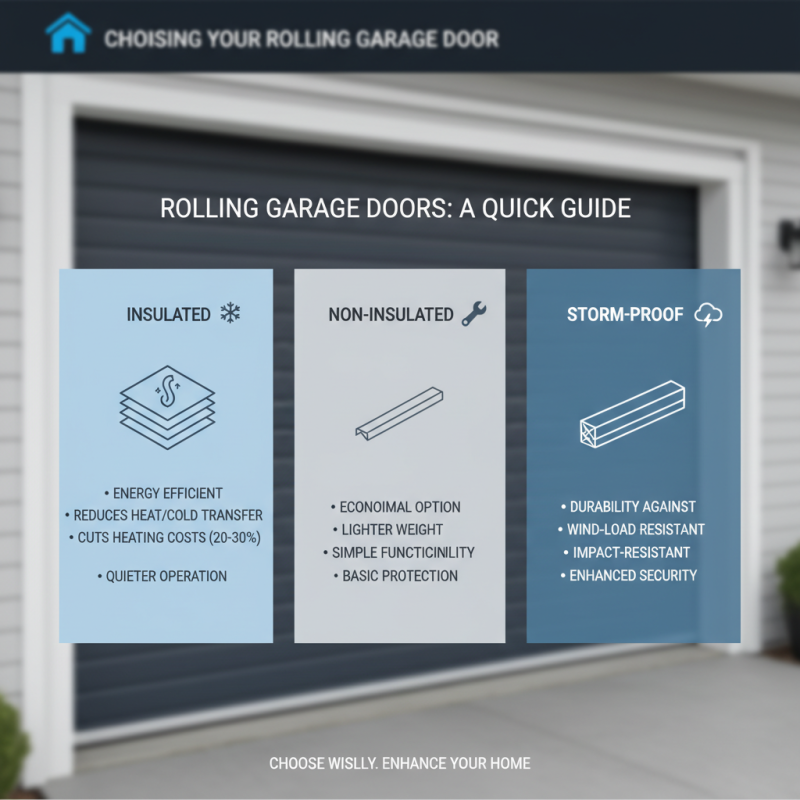
Choosing the right rolling garage door can be challenging. Various types cater to different needs. Common types include insulated, non-insulated, and storm-proof doors. Insulated options, for example, are great for energy efficiency. They can reduce heating costs by 20-30%, according to industry studies.
Non-insulated doors are more affordable. However, they may not provide the same energy savings. They are suitable for mild climates but can lead to higher energy bills in extreme weather. Storm-proof doors offer enhanced protection. They can resist wind speeds up to 140 mph, making them a solid choice in hurricane-prone areas. Consider these factors carefully.
The right choice depends on your local climate, budget, and security needs. Think about your home's design too. A mismatched door can impact curb appeal. Reflect on this: Are you prioritizing energy savings over initial cost? Remember, the perfect door for your neighbor might not fit your needs.
Key Factors to Consider When Choosing a Garage Door
Choosing the right rolling garage door is crucial for enhancing your home’s security and aesthetics. Key factors must be considered. Research shows that about 75% of homes have garages, making their doors a central feature. Durability is essential. Steel doors can last over 30 years with proper maintenance. This is critical, especially in regions with harsh weather.
Another factor to weigh is insulation. A well-insulated door can save up to 20% on energy bills, according to the U.S. Department of Energy. Homes with an insulated garage door often experience increased comfort levels. Noise reduction is important too. If you live in a busy area, quieter models, usually made with composite materials, may be worth considering.
Finally, think about design. A garage door should complement your home’s style. You might want a classic look or a modern touch. However, balancing style and functionality can be tricky. Some options can be pricier than expected. Weighing all choices carefully is necessary. Understanding the trade-offs between aesthetics and practicality can lead to a more satisfying purchase.
How to Choose the Right Rolling Garage Door for Your Home?
This chart illustrates the key factors to consider when choosing a rolling garage door for your home, rated on a scale from 1 to 10 based on their importance. Material, insulation, and security are top priorities, while maintenance and cost are also important but slightly less critical.
Material Options for Rolling Garage Doors: Pros and Cons
When selecting a rolling garage door, the material is key. Each option has its own set of advantages and drawbacks.
Steel is popular due to its durability and security. It withstands harsh weather well. However, it can rust over time without proper maintenance.
A painted finish can help, but regular care is essential.
Aluminum offers a lightweight solution. It’s resistant to rust and corrosion. This makes it suitable for coastal areas. However, it may not provide as much security as steel.
Consider if you need extra protection against break-ins.
Wood provides a unique aesthetic. It can complement a classic home design beautifully. Nonetheless, it requires more upkeep.
Wood is prone to warping and decay. You might love its look, but think about the maintenance involved.
Tips: When choosing, think about your local climate. Choose a material that can endure it. Also, don't forget about insulation properties. An insulated door can save you energy costs. Keep all these factors in mind to make the right choice.
Installation and Maintenance Tips for Your Garage Door
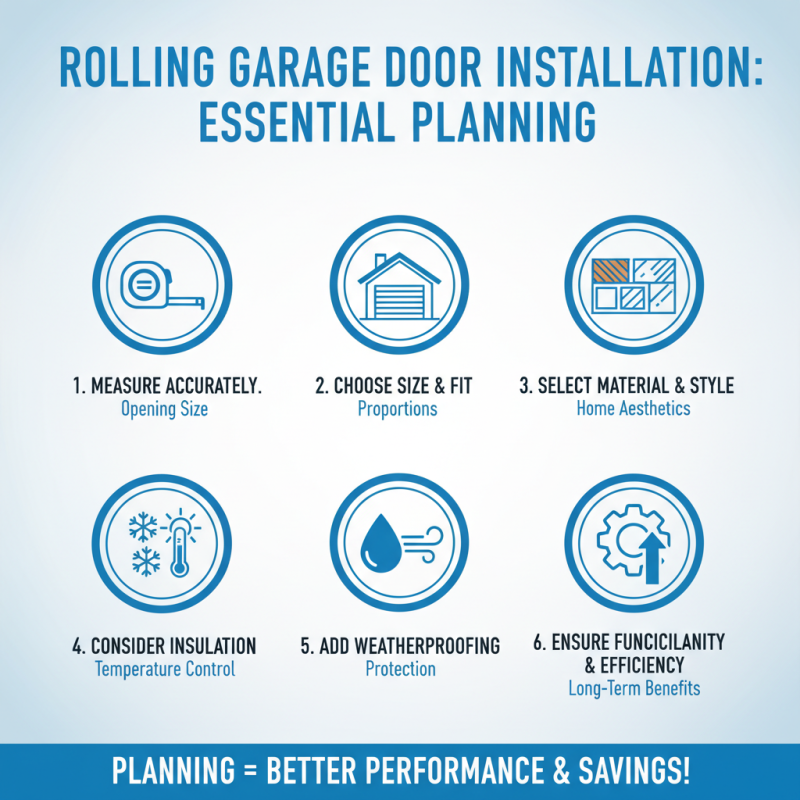
When installing a rolling garage door, proper planning is essential. Choose a door that fits your garage's size. Measure the opening accurately. Consider the material and style that suits your home. Think about insulation and weatherproofing too. Each aspect can affect functionality and energy efficiency.
**Tips for Installation:**
Ensure that all tools are ready before starting installation. This includes a level, drill, and measuring tape. Align the door tracks correctly. An uneven alignment can lead to operational issues. Take your time; rushing can result in mistakes. Don’t hesitate to seek help if needed. Garage doors can be heavy and awkward to handle alone.
Regular maintenance is key to prolonging the life of your garage door. Inspect it monthly for wear and tear. Look for rust, holes, or frayed cables. Lubricate moving parts annually to ensure smooth operation. Tighten loose screws and bolts routinely. A little upkeep can save significant repair costs later.
**Tips for Maintenance:**
Keep the door clean. Remove dirt and debris from tracks to avoid jams. Check the weather seals for integrity. Replacing worn seals can prevent drafts. Trust your instincts. If something feels off, don’t ignore it. Addressing small issues early can prevent larger headaches down the line.