Best Overhead Garage Storage Solutions for Homeowners?
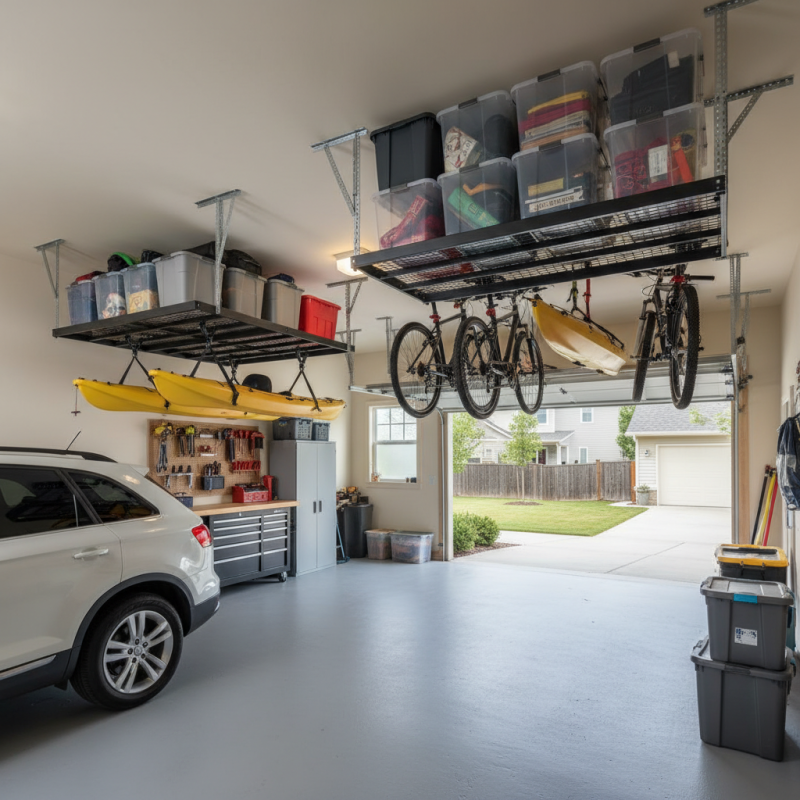
When it comes to organizing your home, finding effective overhead garage storage solutions is crucial. Many homeowners face the challenge of maximizing space in their garages. An overhead garage system can transform unused areas into valuable storage space. Consider the difference it can make to your cluttered garage.
Overhead garage storage units come in various designs and sizes. Some may suit your needs better than others. While researching, it’s important to consider weight limits and material durability. Look for solutions that can handle your personal storage needs.
It’s also vital to reflect on your garage's layout. Assess whether an overhead solution fits well in your space. Safety is another essential aspect; be cautious about installation methods. Overhead garage storage can offer a practical alternative if done correctly. However, if improperly installed, it could create hazards.
Types of Overhead Garage Storage Solutions Available for Homeowners
Overhead garage storage solutions come in various types, each suited to different needs. Ceiling-mounted racks are popular for maximizing vertical space. These racks can hold seasonal items, bins, or sports equipment, keeping them off the floor. Easy access is a plus, but they may require a ladder for higher storage.
Another option is the use of wall-mounted shelves. These units provide a sturdy way to store tools and smaller items. They are within reach, making it easier to grab what you need. However, they can become cluttered if not organized properly. Homeowners should consider these solutions carefully, ensuring that they suit their workflow.
Lastly, pulleys and hoists are innovative choices for heavy items. They can lift bikes or boxes up to the ceiling, freeing up more space. While effective, the mechanism needs regular maintenance to ensure safety. Evaluate your garage's layout and your storage requirements before deciding. What works best for one homeowner may not suit another.
Best Overhead Garage Storage Solutions for Homeowners
| Storage Type |
Weight Capacity |
Installation Method |
Average Cost |
Ideal For |
| Overhead Racks |
250 - 600 lbs |
Mounted to Ceiling |
$150 - $300 |
Bicycles, Seasonal Items |
| Hanging Baskets |
50 - 150 lbs |
Suspended from Ceiling |
$30 - $100 |
Tools, Small Gear |
| Ceiling Storage Lift |
300 - 500 lbs |
Electric Lift |
$500 - $900 |
Heavy Tools, Storage Boxes |
| Wall-Mounted Shelving |
100 - 300 lbs |
Wall Brackets |
$50 - $200 |
Boxes, Bins |
| Overhead Storage Cabinets |
150 - 400 lbs |
Cabinet Mount |
$200 - $500 |
Tools, Household Items |
Factors to Consider When Choosing Overhead Storage Options
When selecting overhead garage storage solutions, various factors come into play. Homeowners need to evaluate their space carefully. The National Association of Home Builders (NAHB) suggests that 90% of American homes face storage challenges. Choosing the right system can significantly impact efficiency and organization.
Weight capacity is crucial. Experts recommend systems that can support at least 300 pounds. This ensures safety and utility. Consider the height of your garage ceiling. If it’s 10 feet or higher, adjustable systems offer more flexibility. Many homeowners overlook the potential of vertical space. The right shelving and racks can free up floor space and reduce clutter.
Accessibility is another key aspect. Systems should allow easy retrieval of items. A survey by the Home Storage Association revealed that 75% of users prefer systems with straightforward access features. It’s vital to reflect on what you store. Seasonal items or tools should have defined spaces. Lastly, always account for your garage’s climate. Humidity can affect wooden shelves, leading to deteriorating conditions over time.
Installation Tips for Effective Overhead Garage Storage
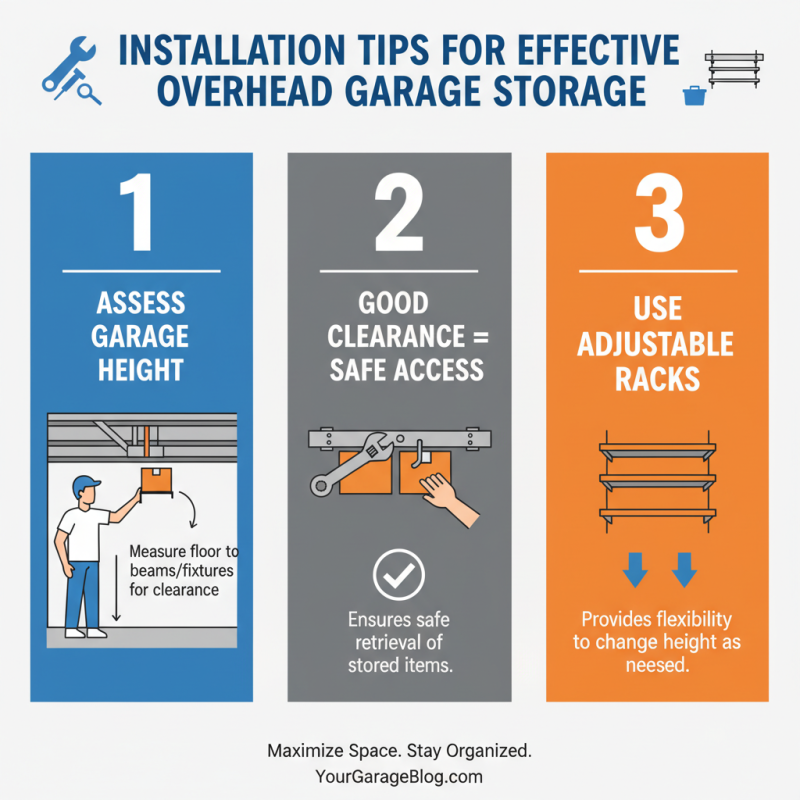
Installing overhead storage in your garage can maximize space and keep your belongings organized. Start by assessing the garage height. Measure the distance from the floor to any beams or fixtures. A good clearance ensures safe access to your stored items. Consider using adjustable racks. This flexibility allows you to change the height as needed.
When planning your layout, visualize where frequently used items will go. Place them in easily accessible spots. Sturdy brackets and supports are crucial for safety. You don't want your items crashing down. Regularly check the condition of your overhead installation. Look for signs of wear, like rust or loose screws, to prevent accidents.
Engage a friend during installation for safer handling of heavy materials. It is easy to misjudge weight when lifting alone. Use proper tools for the job to ensure a secure fit. Rely on floating shelves for lightweight boxes, but be cautious with heavier items. Taking time to reflect on your setup can lead to improvements, allowing you to make adjustments based on your experience.
Best Practices for Organizing Items in Overhead Storage
Organizing your overhead garage storage requires a thoughtful approach. Begin by assessing the types of items you plan to store. Seasonal decorations, sporting equipment, and garden tools are common choices. Use transparent bins to store smaller items. This way, you can easily identify what’s inside without opening each container. Labeling is crucial as well. A simple label maker can significantly reduce the time spent searching for specific items.
Consider the placement of heavier items. Place them toward the back of the garage or in sturdy shelves. This not only maintains balance but also ensures your safety when accessing these items. Smaller, lighter boxes could be placed in front for convenience. Regularly review your storage needs. Over time, you may find items that you no longer need. This can make space for new items or allow for a more organized setup.
Sometimes, items get stored without much thought. This can lead to clutter and chaos. Reflect on your storage habits and adjust accordingly. Engage family members in the organization process. This not only distributes the workload but also encourages everyone to take responsibility for their space. Making overhead storage functional is an ongoing task. Take a critical look at your space and adapt as necessary.
Safety Precautions and Maintenance for Overhead Garage Storage Systems
When installing overhead garage storage systems, safety should be your top priority. Ensure that the beams you attach to are sturdy. Use heavy-duty anchors to secure the framework. Regularly check for signs of wear and tear. A small crack can lead to a significant safety issue. It’s recommended to not overload your storage systems, as this can destabilize the entire setup.
Tips: Always store items in closed bins. This prevents accidental spills or collapses. Ensure that the bins are clearly labeled. This not only saves time but also increases safety. Remember, a well-organized garage minimizes risks.
Maintenance is crucial for longevity and safety. Inspect the hanging mechanisms frequently. Rust or corrosion can weaken support structures. If you notice issues, address them immediately. Avoid placing unstable items overhead. It’s wise to keep frequently-used items lower for easy access.
Tips: Schedule regular maintenance checks. Keeping a log can help track changes over time. Don’t ignore unusual sounds when accessing materials. They often signal underlying issues that need resolve. Prioritize safety, and your overhead storage will serve you well.
Best Overhead Garage Storage Solutions for Homeowners